

Posting on Instagram is part of executing your marketing. Strategy means deciding whom you want to reach, what need you address, why someone should choose you, and how you will evaluate whether your work supports the business.
You can share excellent photos, post consistently, and receive comments without settling those decisions. You can also publish less frequently with a clear plan. What matters is the connection between your content and the outcome you are working toward.
If you run a small service business and keep wondering what to post next, start with a different question: what does a potential customer need to understand before considering my service?
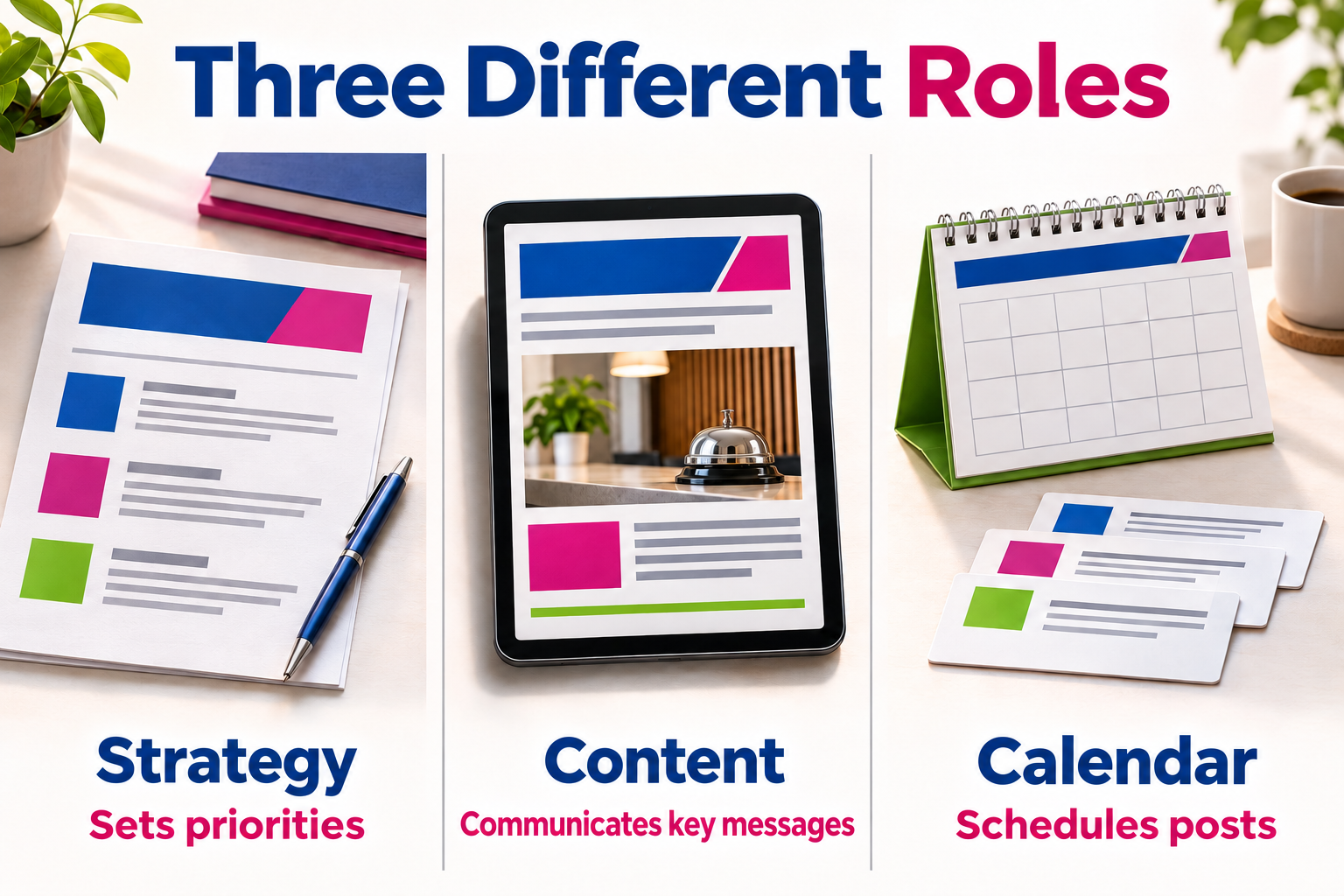
Your strategy sets priorities: audience, offer, objective, channels, resources, and measures of progress. Your content plan translates those choices into topics and messages. Your calendar assigns dates, formats, and responsibilities.
“Post three times a week” describes a schedule. “Help small retailers understand when they need new product photography” gives your content a direction. To complete the strategy, you still need a defined offer, an appropriate next step, and a process for handling inquiries.
A full calendar can make production easier. It does not establish that you are reaching suitable buyers or answering their questions.
Generating inquiries for a service, introducing existing customers to another offer, and building recognition among a particular audience are different objectives. Pick a priority for your planning period and describe what progress would look like.
If you want quote requests, define what makes a request relevant. That might mean someone asking about a service you provide, within your service area, with enough information to continue the discussion. An emoji comment represents a different kind of response.
“People interested in our services” gives you little direction. Identify what they are trying to accomplish, what concerns them, which alternatives they consider, and what makes them hesitate.
Review incoming questions and talk with customers. Their language can suggest practical topics: what the service includes, how to prepare, reasonable timelines, or what affects a quote. Keep observed needs separate from assumptions you still need to test.
A post can attract attention while leaving basic questions unanswered: what you sell, who it suits, and how to buy it. Your profile, content, and replies should provide consistent answers.
Define the scope, relevant conditions, and evidence you can share. Use your own work and authorized testimonials. Do not present hypothetical examples or generated images as actual customer results.
A post might help someone recognize a problem, understand an option, see how a process works, or resolve a concern. Every post does not need to ask for an immediate purchase, but you should be able to explain its usefulness to the audience you chose.
Select the format after deciding on the message. A carousel could compare options; a video could demonstrate a procedure; a Story could answer a focused question. These are editorial possibilities to test with your audience, rather than universal performance rules.
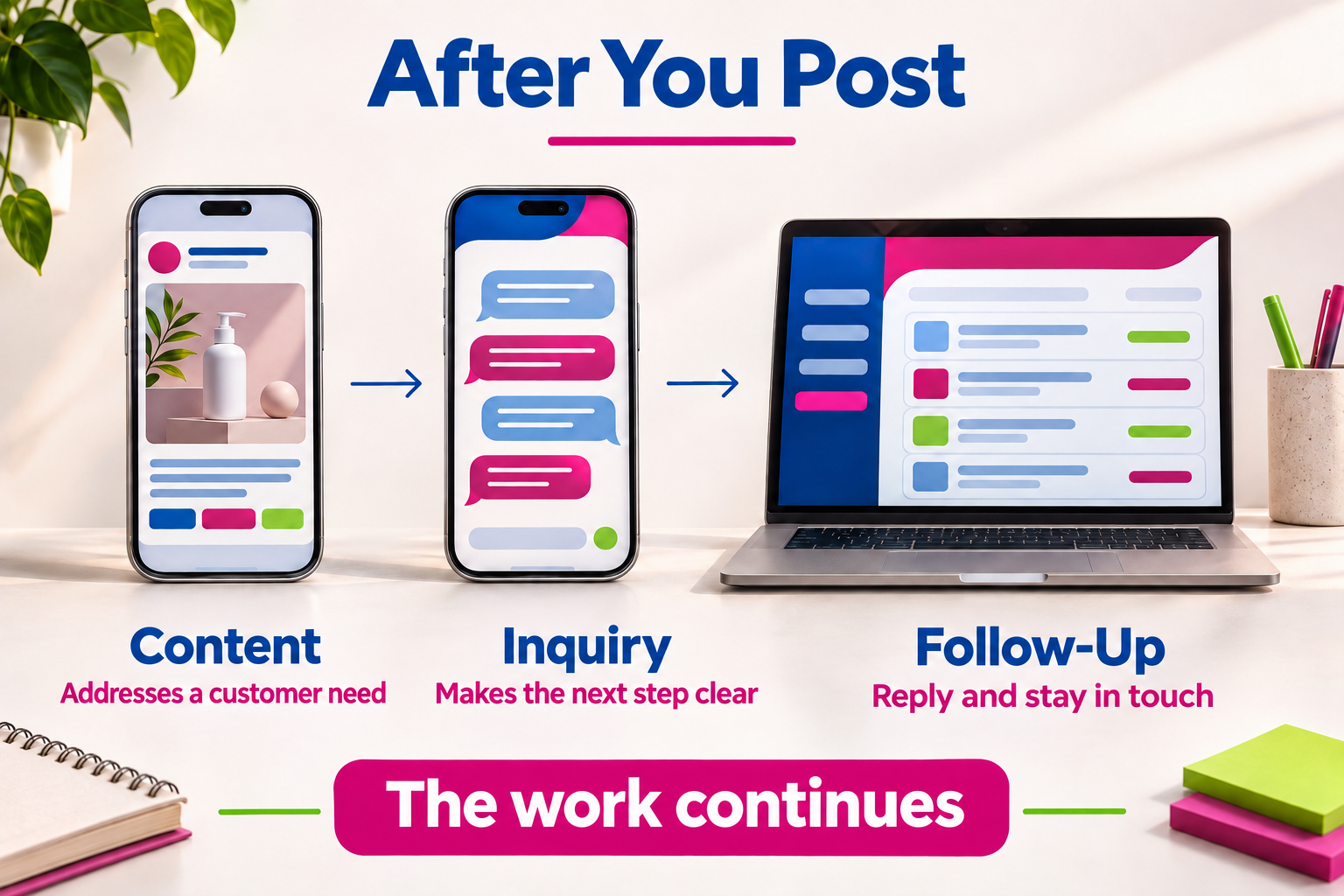
Choose a suitable next step: check availability, explore a service page, ask a question, or book. Test the path on a phone and assign someone to handle the response.
Plan time for production, review, replies, and follow-up. If publishing consumes every available hour, the customer conversation may be where interest fades.
Hypothetical example: a photography studio wants inquiries from small brands that need catalog images. Its current posts feature attractive photographs but provide little explanation of the service.
A more focused content plan could include:
The studio can guide interested people toward discussing their catalog. It then records whether the need fits its service, what information is missing, and whether the inquiry progresses. It does not assume that every post will produce a sale.
When customers need more information before contacting you, explore this guide to turning Instagram traffic into WhatsApp leads with a website.
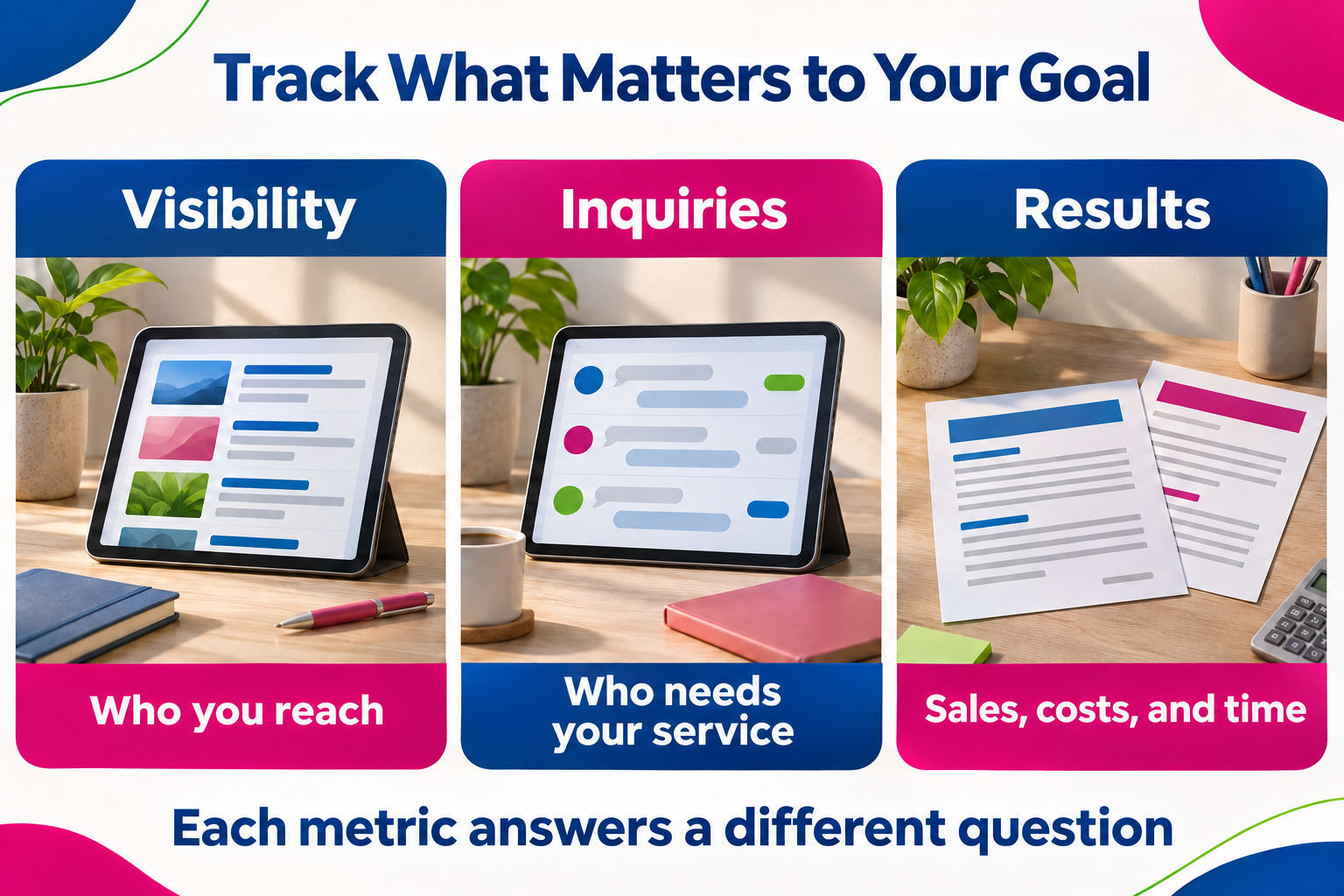
Reach, saves, and interactions can help you understand how people respond to your content. Their value depends on the question you are asking. None independently confirms that someone will become a customer.
| Question | Useful information | Interpretation limit |
|---|---|---|
| Is the content reaching people? | Reach and available audience characteristics. | A larger audience is not necessarily a suitable audience. |
| Is it attracting interest? | Questions, replies, saves, and profile visits. | Interest is different from a service inquiry. |
| Is it creating opportunities? | Relevant inquiries and conversations that progress. | An opportunity may still not become a sale. |
| Is the activity sustainable? | Confirmed sales, costs, and staff time. | Revenue is not the same as profit. |
If you send people to your website, UTM tags can identify campaigns in analytics tools, as described in Google Analytics documentation on campaign URLs. Appropriate setup is required, and the tags do not independently identify every subsequent conversation or sale.
Combine the available information with a simple sales record. Distinguish confirmed attribution from estimates, and avoid crediting the latest post with every sale. Referrals, earlier visits, and other channels may also contribute.
Before commissioning more designs, finish these six statements:
Then build a schedule you can sustain. Set a regular review to examine recurring questions, suitable inquiries, and stalled conversations. Changing your message, offer, and audience at the same time makes it harder to understand what influenced the outcome.
Instagram does not need to carry your entire marketing effort. Depending on how customers buy, referrals, search, partnerships, or email may deserve attention too. Deciding where to concentrate resources is part of the strategy.
There is no single frequency that suits every business. Choose a schedule that leaves room for quality, replies, and evaluation. Adjust it to your resources and your audience’s response.
No. Before allocating a budget, define the audience, offer, message, destination, and evaluation method. Paying for distribution does not automatically clarify a confusing offer.
Look beyond the number of deliverables and formats. Ask about objectives, research, responsibilities, message handling, reporting, and reviews. Confirm which tasks are included and which remain with your team.
Tell Pixelgrafía which service you want to promote and how inquiries reach you today to discuss a content and social media management approach suited to your business.
Complete the form and we will reply as soon as possible.


