

When potential customers discover a company online, its photographs and videos help them understand what it sells, how it operates, and what they can expect before making contact.
Professional business photography is not simply about creating beautiful images. It is about communicating useful information, representing the company accurately, and helping customers make informed decisions.
That is why professional photography and video for businesses should be planned around specific communication goals and the channels where the content will appear.
Whether you operate a retail store, restaurant, manufacturing company, or professional service business, a carefully selected collection of images can support your website, product catalog, social media, and sales materials.
You do not need hundreds of photographs. You need the right images for the right purposes.
Every industry has different visual requirements. A restaurant needs food and interior photography, while an online retailer needs clear product images. A service company may benefit more from photographs showing its people, facilities, and work.
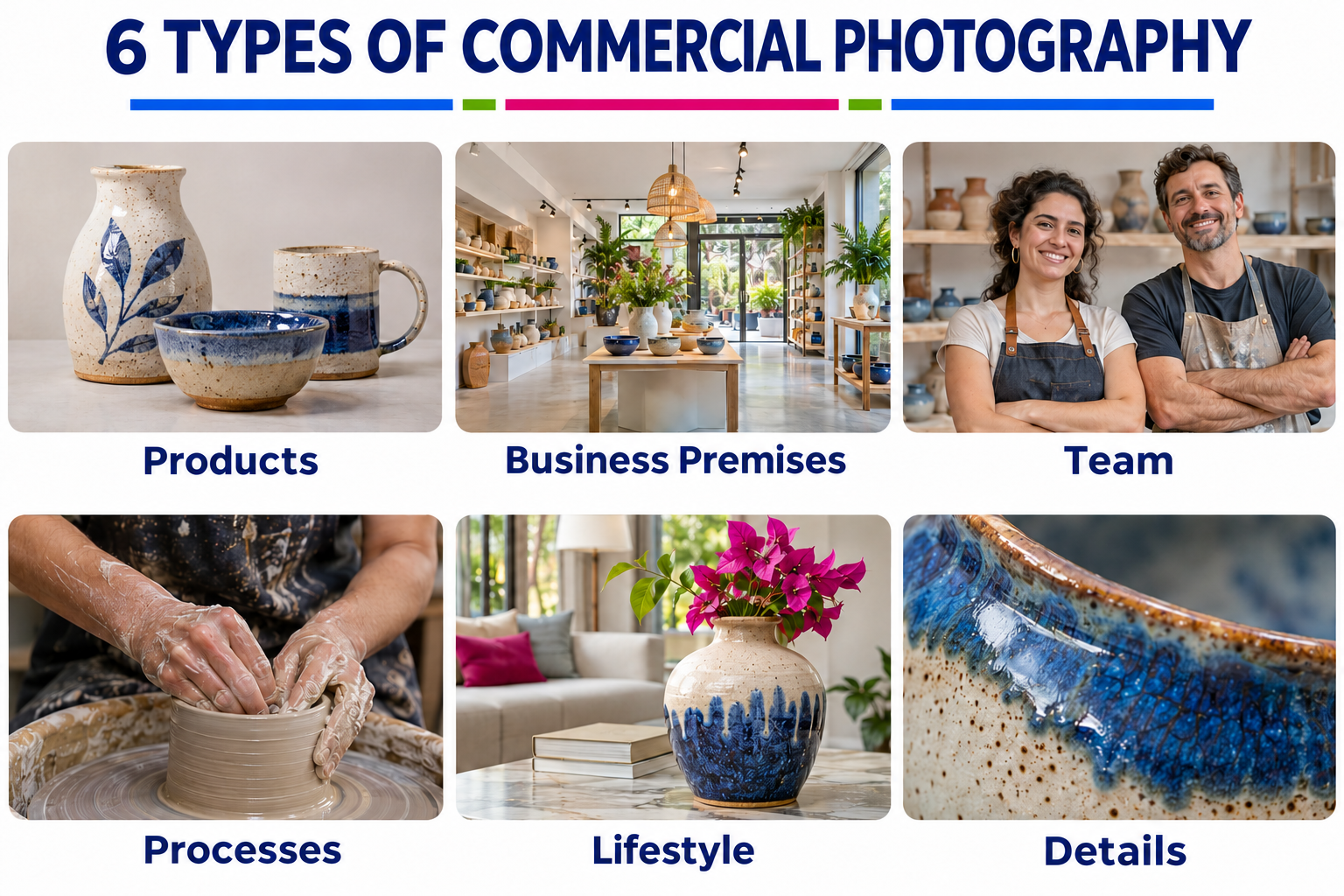
Most businesses can organize their photography needs into six categories.
Product photography helps customers examine the items you sell.
Effective product images show accurate colors, shapes, materials, textures, and relevant details. Additional photographs can demonstrate size, packaging, and how a product is used.
Product photography is particularly useful for:
For example, a home decor company might need individual product photographs, close-ups of materials, and lifestyle images showing its products in realistic interiors.
Photographs of your premises help customers recognize your location and understand the environment they will experience.
Useful subjects include storefronts, entrances, reception areas, workspaces, equipment, and customer facilities.
These images are especially valuable for restaurants, medical practices, hotels, beauty salons, gyms, and businesses that welcome visitors.
Accuracy matters. Editing should not create misleading impressions about the size, condition, or appearance of a location.
Professional portraits introduce the people behind a business.
They can be used on company websites, professional profiles, presentations, and other corporate communications.
Not every portrait needs to be formal. Natural photographs of employees performing their work can communicate expertise and personality while maintaining a professional appearance.
These photographs show how a company works.
Examples include technicians repairing equipment, professionals serving customers, craftspeople creating products, and employees performing specialized tasks.
Process photography can explain services that are difficult to describe using words alone.
Lifestyle photography places products or services in realistic situations.
A furniture company might photograph its products in a furnished room. A food business might show a prepared dining table. A landscaping company might feature plants in a completed outdoor space.
These images help customers understand how a product or service fits into everyday life.
Close-up images highlight materials, craftsmanship, textures, components, and other features that deserve attention.
They are particularly helpful when customers need to compare similar products or examine quality-related details.
Video can communicate movement, demonstrate procedures, and explain experiences that are difficult to capture in a single photograph.
However, professional video production should serve a specific purpose rather than simply follow a trend.
A company introduction video presents the business, its activities, facilities, and services.
It may be used on a corporate website, in sales presentations, or as part of an institutional communication campaign.
Demonstration videos show how products work, what features they offer, and how customers can use them.
They are especially helpful when movement, assembly, or operation influences a purchasing decision.
Vertical videos can introduce products, answer customer questions, demonstrate processes, and share company updates.
Each video should focus on a clear message rather than trying to explain everything at once.
With appropriate permissions, authentic customer interviews can provide useful context about real experiences.
Testimonials should accurately represent what participants said and avoid unsupported claims.
These videos answer common questions, explain procedures, or teach customers how to use products and services.
They can also make frequently requested information easier to access.
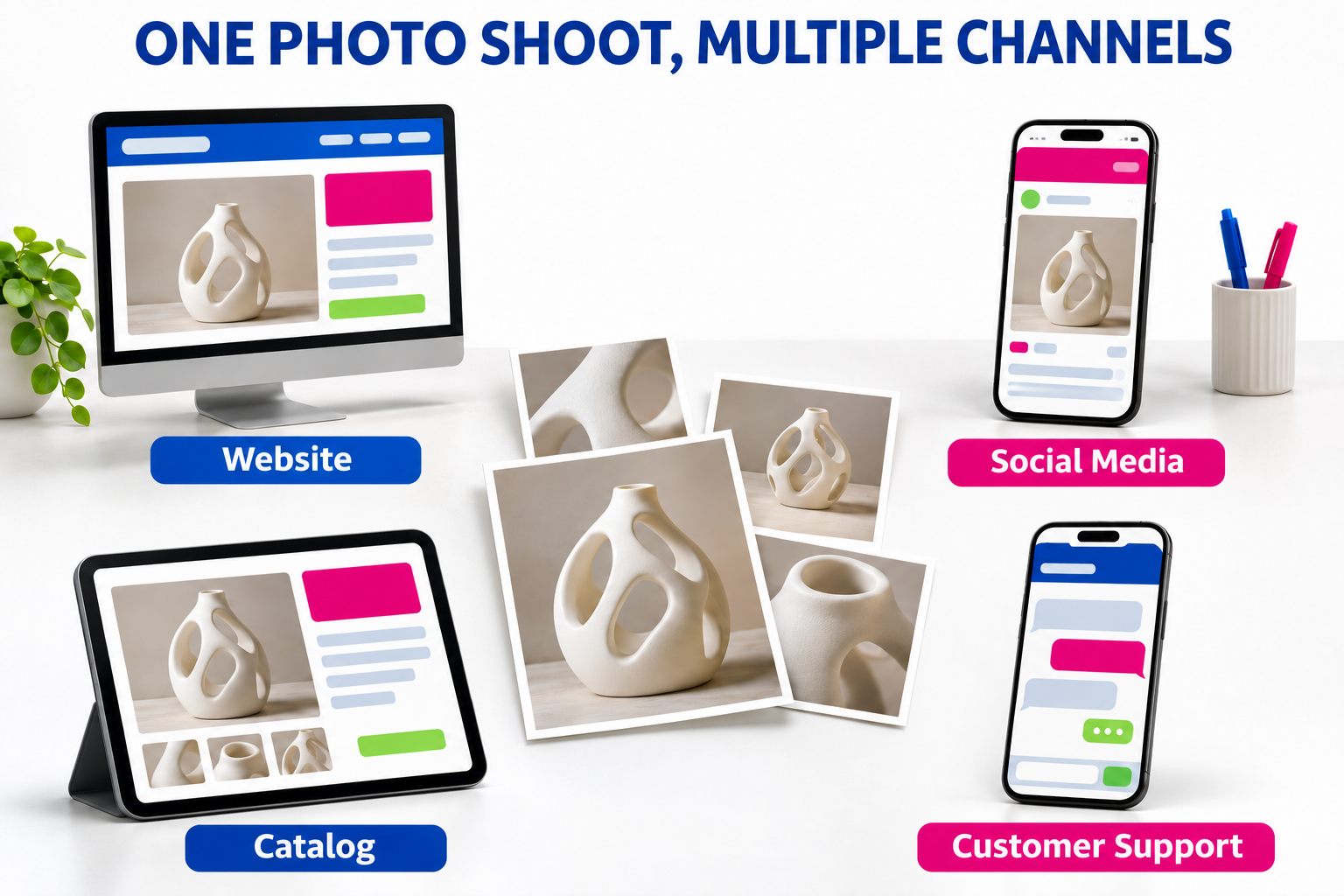
A single well-planned production can supply content for multiple marketing and communication channels.
Homepage photography should clearly communicate what your company does.
Service pages can feature people at work, facilities, and relevant examples. About pages can introduce team members, while contact pages may show actual business locations.
Product images should help visitors compare items, inspect important details, and understand what they are purchasing.
Consistent lighting, backgrounds, framing, and presentation make catalogs easier to navigate.
Professional images can be adapted for posts, stories, carousels, and short-form videos.
Planning for different aspect ratios during production helps prevent important subjects from being cropped out.
Organized product images can support customer service conversations, quotations, and direct sales.
Instead of relying on lengthy descriptions, sales representatives can share relevant photographs that answer specific questions.
Eligible businesses can use authentic photographs of their locations, products, teams, and services to help potential customers understand what they offer.
Google recommends clear, well-lit images that accurately represent the business. Its official business photography guidelines provide recommendations for different business categories.
Professional photography can also support digital advertisements, brochures, proposals, presentations, and other business communications.
Before reusing images, confirm that your licensing or production agreement covers the intended applications.
Businesses operating in the Valles del Tuy area of Miranda State, Venezuela, can use professional visual content to present their products, facilities, and services to local customers and audiences beyond their immediate area.
Companies in Charallave, Ocumare del Tuy, Cúa, Santa Teresa del Tuy, Santa Lucía, and nearby communities may have different production requirements depending on their industries.
For example, a bakery in Charallave might prioritize product and interior photography. A manufacturer in Cúa might need images of production processes and finished goods. A service company in Ocumare del Tuy might benefit from professional portraits and workplace photography.
These are hypothetical examples, not descriptions of actual client projects.
Location-based production requires planning for access, lighting conditions, operational schedules, and the availability of products or personnel.
Pixelgrafía provides professional photography and digital image editing services. Businesses in Valles del Tuy can inquire about suitable visual content and confirm production arrangements for their location.
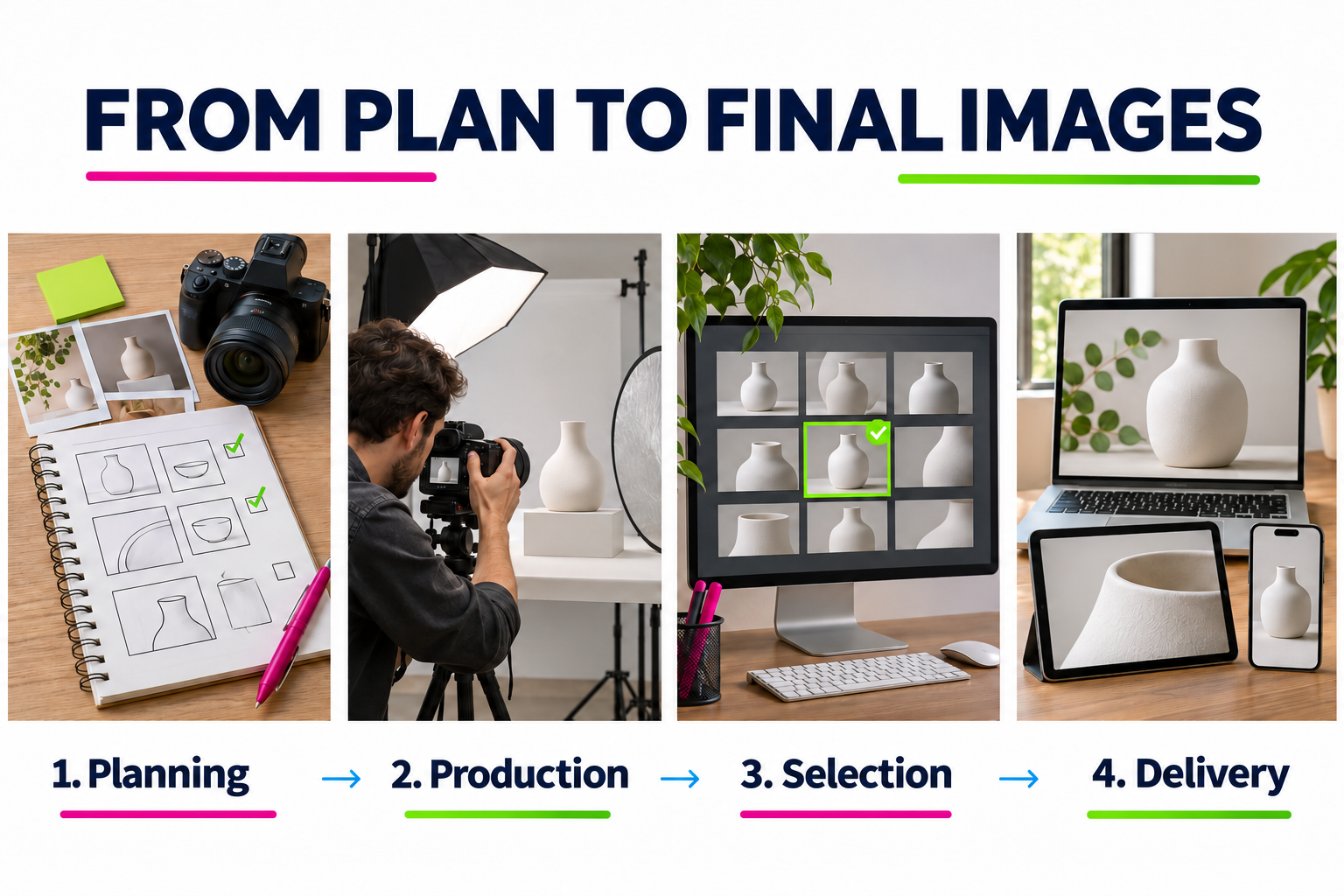
Start by listing the channels that need content: your website, online store, social media, advertisements, or sales presentations.
Each channel may require different framing and file formats.
A shot list is a document describing the photographs or video scenes that must be captured.
Include products, people, facilities, processes, and important details. Explain the purpose of each image and where it will appear.
Organize products, clean relevant areas, and coordinate employee participation.
Obtain appropriate permissions when identifiable individuals or third-party locations are involved.
A wide photograph may work well as a website banner but poorly as a vertical social media story.
Capture alternative compositions when the same subject will appear in different formats.
Before production, clarify the number of final images, editing requirements, file formats, delivery schedule, and permitted uses.
If you need original camera files or unedited footage, include those requirements in the agreement.
Not every business photograph requires a professional photographer.
A modern smartphone, suitable lighting, and careful composition may be enough for routine updates, informal behind-the-scenes content, and everyday social media posts.
Professional production becomes particularly useful when you need:
A practical approach is to commission professional photography for your most important materials and create routine content internally.
There is no universal number. Start with the images needed for your most important products, services, website sections, and communication channels.
Original photography is preferable when customers need to see your actual products, people, or facilities. Licensed stock images can support conceptual content but should not be presented as authentic photographs of your business.
Not necessarily. Photography may be the priority for product catalogs, while video may be more useful for demonstrations, moving equipment, or complex procedures.
Yes, provided your usage rights allow it and the images are adapted to each platform's technical and visual requirements.
Pixelgrafía offers professional photography and digital image editing. Businesses in Valles del Tuy can inquire about production availability, project scope, and location-specific arrangements.
Need professional images for your business? Contact Pixelgrafía to discuss your products, services, and communication goals. We can help you identify the visual materials your company needs and explore suitable production options.
Complete the form and we will reply as soon as possible.


