

Products retail is constantly changing with the changing consumer behavior. Consumers today prefer to have their products delivered to their homes instead of going out to pick them up. In keeping with this trend, product delivery services are on the rise. Using the latest mobile technologies, startups are entering the product home delivery market; even traditional brick-and-mortar stores are adapting to consumer demand and offering online delivery in addition to their existing business.
The online business has been one of the most reliable businesses, even during unprecedented times like covid19. Amid a standstill, the home delivery business thrived and grew exponentially.
The digitalization of traditional businesses gained momentum as people became more aware of social distancing. With the awareness of social distancing growing amongst people, traditional businesses are increasingly going digital. Companies started taking advantage of the latest technology and reaching out to customers to deliver products to their doorsteps. Delivery of products is one of the most popular businesses that grew during COVID19.
The present and future are looking for products and consumers. The online products delivery business is picking up as major players such as Amazon, Walmart, etc., enter the online market. Small and medium companies now need to join the wave of digitalization to keep their customers satisfied. The demand for products delivery is growing as people settle and start families. Let’s look at some of the interesting trends in the products delivery business across the globe.
The USA has always been at the centre stage of all the development and innovations that have taken place in the world. The USA witnessed 3x growth in their online products delivery business compared to 2019. According to another report, 70% of products consumers in the USA will be ordering online by the end of 2022. The penetration of online grocery delivery is predicted to grow from 30% in 2019 to 60% in 2024-25.
When we observe Canada, it is much more of a laid-back market as compared to the USA. It is predicted that the online products delivery market in Toronto and Vancouver will grow from a $2 Bn industry to a whopping $4 Bn industry in the coming years. Considering the majority of the population in Canada is made up of millennials, the demand for online products is set to increase in the coming years as the in-store traffic decreases.
As for the UK, its demography has been hailed as the fastest habit-forming country in the world. With the lockdown imposed for the longest time compared to other countries, its population has grown fond of shopping online, which is bound to become the lifestyle; considering this new shopping behaviour among consumers, companies have started to take their operations online.
Storage:
Grocery items are perishable and need to be stored under refrigeration. This means either you need a warehouse, room, or van with refrigerated storage. This requires a considerable amount of capital upfront.
Low-profit margin:
Customers have a plethora of options these days, along with the reluctance to pay. With multiple companies offering great discounts on products, it leaves very little room for profits.
High Competiton:
The grocery business is one of the most popular businesses worldwide. It already has many big players, making it a competitive space for a new startup to acquire customers.
Delivery and Logistics:
With regular stores, delayed delivery, delivery of wrong items, or expired products can be managed, but for your online business, these issues can prove to be very problematic. Customers ordering online want their deliveries as soon as possible. This can be solved by hiring and training employees and having an intelligent delivery management system in a place like Pixel Shop.
The first step to building an online business is choosing the right name for your business that is easy to remember and has a good recall. Now, we understand that choosing a name can be a cumbersome process. You can use a business name generator to create a name for your business and get a name that has a good recall. We at Pixelgrafía, can also help you design your branding.
In order to start your online grocery business, you need to get a trader license, learn and abide by the taxation norms of your region, and get a food license if applicable in the case of perishable products. The licenses and registrations might depend on your region, so do check it out with your local authorities or hire a legal advisor to cut through the hassle.
There are three major business models that are widely popular in the grocery delivery business:
Inventory/ Storefront Model:
In the inventory/ storefront model, the owner of the platform sources and stocks up the groceries and other items from different vendors and delivers them to the customers using in-house or 3rd party delivery agents.
In simplest terms, it is an offline grocery store going online using website/ mobile applications with an option of home delivery service. Now, customers can order groceries online from you. You will deliver the groceries to your customers using either your in-house delivery agents or a 3rd party delivery service network.
You will earn from the order you receive from the customer and the delivery charge you can charge.
Multi-Vendor Marketplace Model:
The Multi-Vendor Marketplace Model is very similar to the UberEats model or Zomato model. This is one of the most preferred business models among grocery delivery start-ups. In this model, you don’t need to worry about inventory. You act as a middleman between the grocery store/vendor and the customer. You provide a website and/or a mobile application to place the order and grocery vendors to manage the orders, catalog, and inventory.
The customers will place an order on your website/ mobile app by selecting a vendor. It will assign the order to a delivery agent who will pick it up from the vendor and deliver it to the customer. The app will then transfer the order to the vendor once the vendor accepts the order.
This model allows you to earn through commission on orders, subscription for listing on the app, advertisement from the vendor, and delivery charges from the customer.
Shopping Model:
E-commerce grocery startups prefer this model. In this model, you, as the admin/owner of the platform, select the vendor who will fulfill the order, not the customer, as he did in the previous models.
When the customer places an order, the admin/owner of the platform selects the vendor who will fulfill the order. Once accepted, it is assigned to an in-house delivery agent who delivers to the customer. This is the same business model as Instacart.

Once you’ve selected your business model, the next step is to develop your own online delivery app to cater to your customers. There are three modes of app development that are available in the industry:
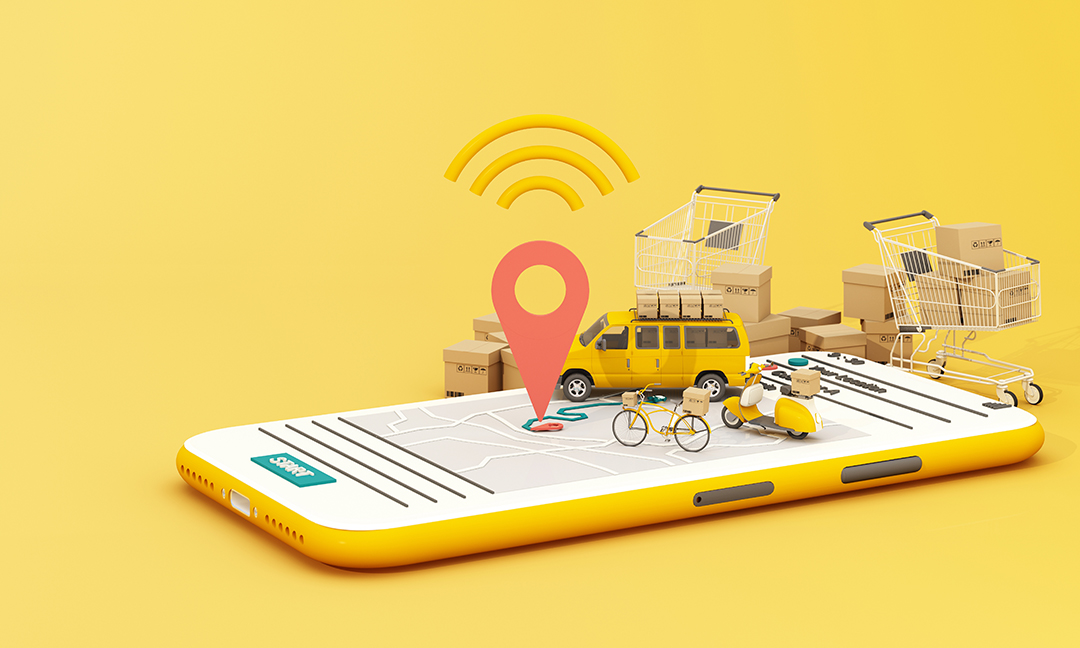
To be successful in the grocery delivery business, your grocery delivery app should provide the best experience to your customers. To achieve this, your app should be up to date with the latest technology, have the latest features, and have an intuitive UI so that your customers can use the app easily.
Some of the top features for an on-demand online delivery customer app are:
We offer a complete package that includes order management and delivery powered with Pixel Shop and Pixel Food Multi-vendor Brokerage Management.
Pixelgraphy has empowered many entrepreneurs to achieve their dream of taking their business online. You can be the next in line to fulfill your dreams of having a store or marketplace on the App Store and Play Store. Don't miss this opportunity to promote your business in the next step.
Contact us today!
Complete the form and we will reply as soon as possible.


