

The most common stimulus for socializing and creating friends is alcohol or liquor. A party isn’t a party until there’s some drink involved. So, whether you prefer a glass of rich red wine with dinner or like to get a little tipsy with your friends, a liquor delivery app or an on-demand alcohol delivery service app will come in handy.
Having your booze delivered is similar to having your groceries or cooked meals delivered to your home. As an on-demand alcohol delivery business, there are undoubtedly some additional safeguards, licenses, and rules to follow.
COVID-19 has resulted in a dramatic shift in consumer preference from physical retailers to online sellers. Businesses are migrating to online mode to stay competitive as an increasing number of consumers join the platforms every day.
The alcohol sector isn’t lagging in terms of adjusting to the new normal. According to studies, the on-demand alcohol delivery sector is predicted to reach $1,684 billion by 2025, growing at a CAGR of 2%. In addition to this, the exponential expansion has attracted significant time and financial resources, resulting in quick returns for business owners.
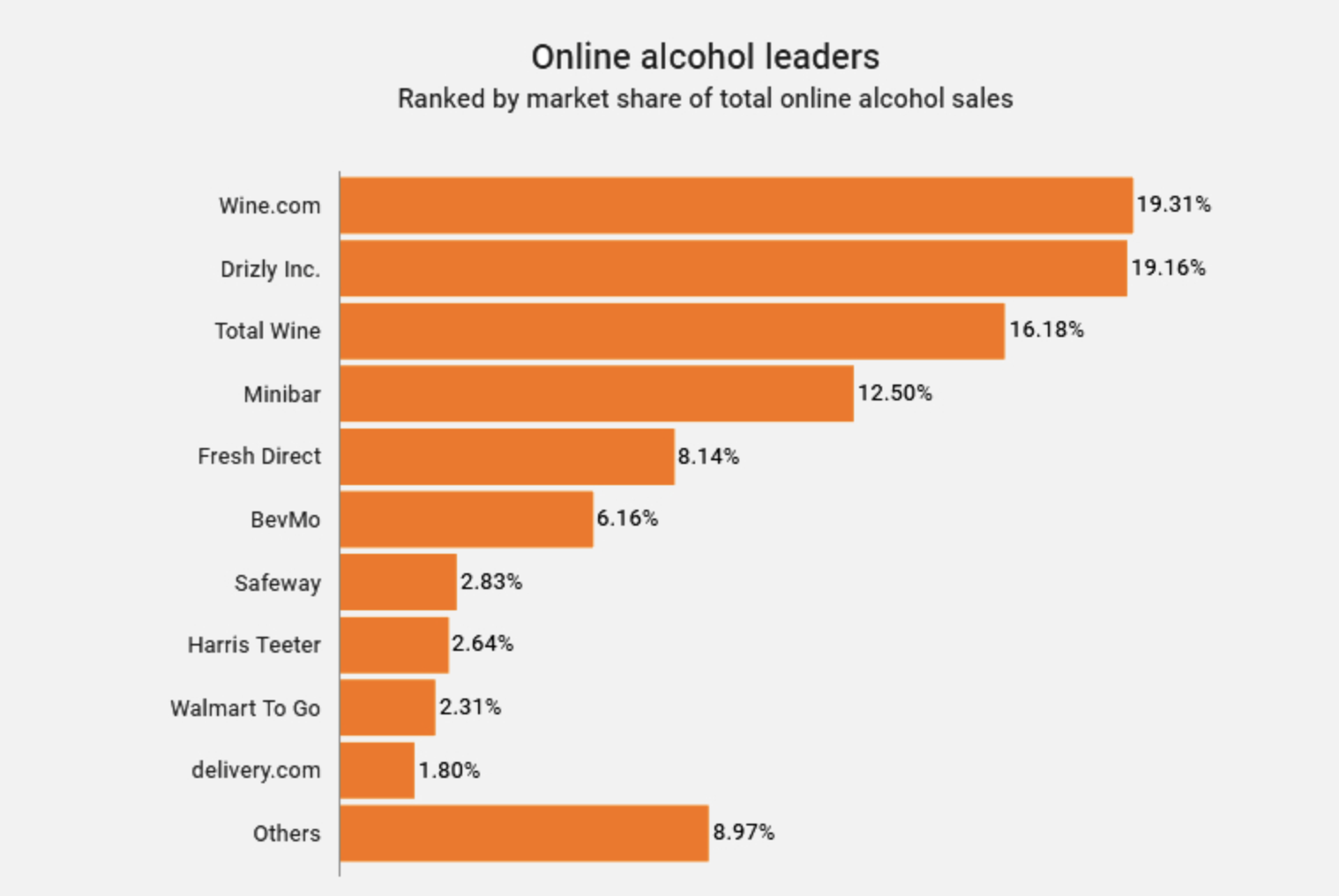
There are a few leading solutions in this arena, giving inspiration to multiple investors, like Drizly, Wine.com, Total Wine, Minibar, etc. So, how do you go about launching an alcohol delivery service? That’s what we’ll be discussing in this blog today.
Before entering, It is wise to measure the depth of water. This is why we must consider what directions the alcohol industry’s market may go in shortly. According to credible sources, the global market for alcoholic beverages will prosper because it is expected that by 2025, this industry will have grown to $1,684 billion. In 2017, the same industry’s market capitalization was $1,439 billion.
Without a doubt, the market is growing at an unusually fast pace. It is self-evident that the inherent ease of the online liquor delivery business would propel market growth at a rapid pace. All we see are endless potential and prospects in the market, where this concept has yet to be introduced.
Since the coronavirus pandemic began, demand for alcohol has skyrocketed. Hence, it is now the ideal moment to start your own on-demand alcohol delivery business. One of the biggest reasons to start an alcoholic beverage delivery business is the ease of access to these products and to provide citizens with the comforts that they have already become accustomed to as a result of the confinement.
Another motivation to establish your own alcohol delivery business is that many restaurants and pubs have closed due to movement limitations. As a result, many were hesitant to purchase outside food and drinks for fear of contracting the disease.
In 2017, the global alcoholic beverage market was worth $1,439 billion. And by 2025, this is expected to reach $1,684 billion, indicating a CGAR of 2.0 percent between 2018 and 2025. This growth is primarily driven by the surge in the global young-adult demographic, increase in disposable income, and hike in consumer demand for premium products.
Alcohol delivery apps help businesses attract more customers and maximize revenues by offering unique and simple services. These apps provide a greater return on investment, allow for cashless transactions, and allow admins to keep track of daily transactions. As a result, investing in the development of an delivery app will undoubtedly pay off handsomely.
If you want to build an on-demand alcohol business, you must recognize that a single application must be suitably qualified to operate with liquor stores, employers, distribution personnel, and the administrator. The objectives of each member in this chain vary greatly. The ultimate goal is to construct a business application that provides the optimal on-demand liquor delivery application to all stakeholders.
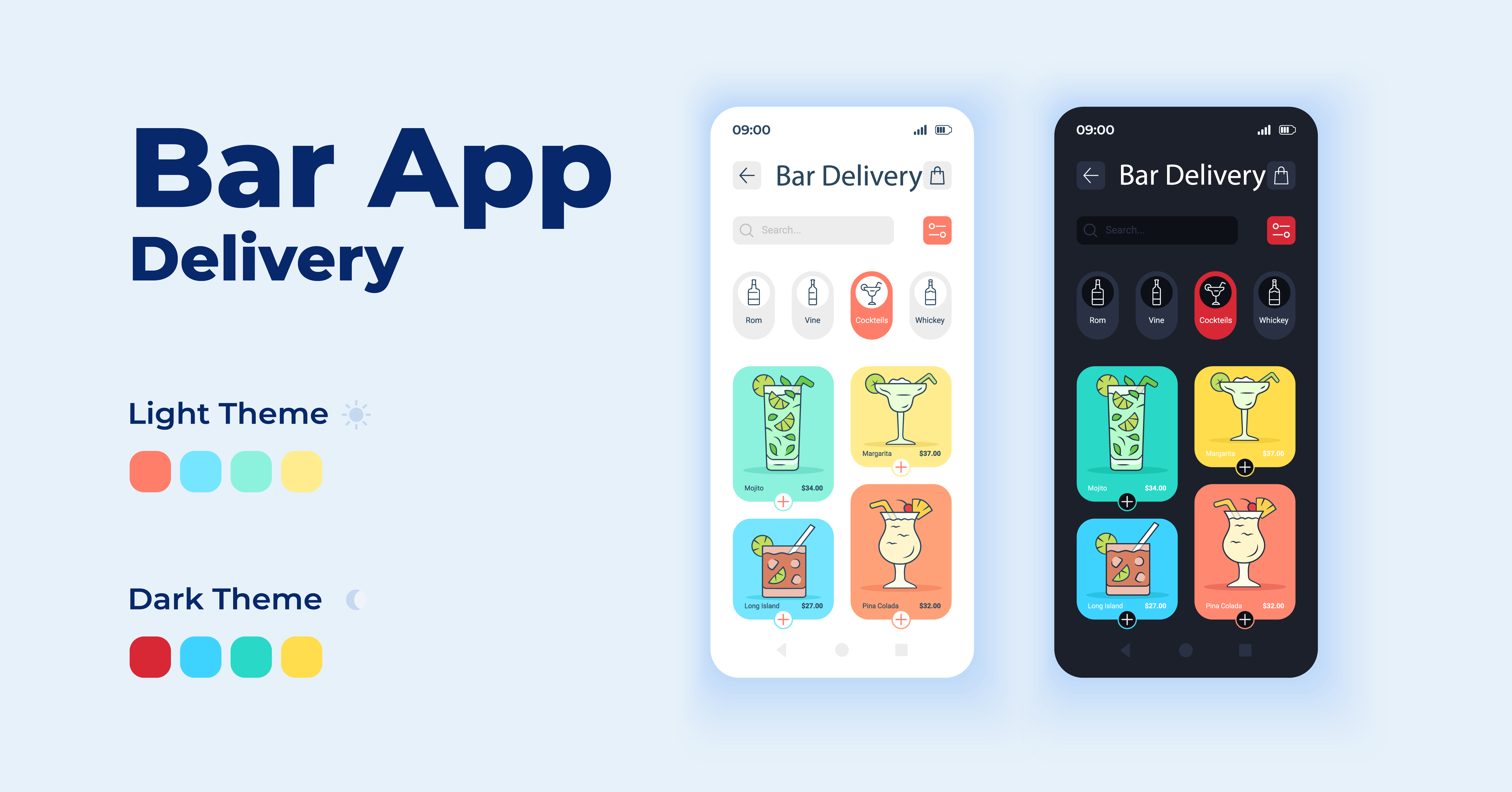
The layout and appearance of your alcohol delivery app should be customizable and rendered while maintaining the brand’s theme to attract customers.
The app should allow restaurants to track menu items so that sales and prices can be adjusted in the future.
Whether you’re using or banning the service, the age requirement must be your top focus in your liquor delivery application. Furthermore, each country has its own variants and distinctions in regulation when it comes to alcohol policies that you should be aware of.
After a chat with the client, concentrate on the product’s features until the aesthetics and user interface were well-managed. For the management of pending requests, bargains, and customized updates, a push notification must be provided so that the consumer cannot avoid them in any situation.
If you have the resources, connect a chatbot to the app. It can be powered by artificial intelligence or by dedicated staff who can help clients with questions about orders, programs, and promotions, among other things.
Selecting a Partner – Choose a firm to design and create your app. Research, analyze, and decide on a company with which to collaborate on your idea.
Product discovery – Figure out what you want to make, who you want to make it for, and why. Defining your product’s goal and end consumers, as well as clarifying your app’s vision. To create your MVP, you must first decide which features are the most important.
UX / UI app design – Determine how your app will work and look. Creating a user journey map, clickable wireframes, visual user interfaces, and motion design (animations & screen transitions).
Project kick-off and setup – Final preparations before beginning app development. Defining each team member’s job, reaching a consensus on rules and next steps, as well as configuring tools.
App development with Quality Assurance – App production with Integration: plan, code, build, test (and repeat). Ensuring Quality Assurance at every stage of app development with manual and automated tests.
Preparation and release of the apps on the Google Play and Apple App Stores – Uploading assets required by law and promotional materials, beta testing, improving the product page/store presence, and everything else your app approval requires to go as smoothly as possible is all part of the release process.
Post-development phase – Detecting crashes, app statistics monitoring, product enhancement, and development. Your app maintains its appeal and adjusts to changing market conditions as well as user feedback.
With Pixel Shop, you can provide your consumers with the best online alcohol delivery experience.
With Pixel Shop, you can have the best app features that every on-demand alcohol delivery service should have. Make certain that these app features are created just for your digital app solution.
Login: By registering for the app, customers can find high-quality drinks and discounts on them.
Liquor Listing: After registering, the user will be able to see all of the listed drinks from the nearby establishments. Check the price and learn more about the drinks.
Apply Filters: Using the most up-to-date app development skills, you may add filters to your app, making it easier to make purchases. The filters allow you to choose from a variety of liquor categories, pricing points, and drink customer ratings, among other things.
Place Orders: Once you’ve decided on your poison, you may place a drink order.
Track Order: Once you’ve made your order, the app, like any other delivery service app, will display you an expected delivery time. Get the order status, such as process, still in the queue, out for shipment, and so on, with this function.
Cashless Payment: Just as the rest of the world is turning cashless, the alcohol delivery app is following suit. Hence, the software accepts various payment methods, including credit/debit cards, net banking, PayPal.
Order History: There are instances when you want to order the same drink you had the night before or the week before. You may view prior orders and repeat orders with a single click using the order history function.
Product Review & Feedback: Users can rate both the delivery service and the drinks based on their experiences.
Orders: delivereries boys will be able to receive a push notification every time an order is assigned to them. In the same way they can change the order status.
Details: within the detail of each order, the delivery person obtains the consumer's data to make each delivery.
Online / Offline: the delivery person will be able to work on their own schedule, so the app allows them to be online or not.
Admin Login: The primary business and app owner, as well as your administrative staff, can access to the admin panel. Also, the admin can examine all business and functional channels through the control panel.
Orders assignment: the administrator will be able to assign each order to a specific delivery boy, the platform will automatically list the them and show who are online and available closest to each delivery point.
Order Management: Admin can keep track of all assigned orders and data.
Settings: on the CMS the admin maintains all the settings of the connected apps, like adjusting prices, allowing/blocking any user or delivery person.
Marketing Management: From the admin app, the admin can control the entire marketing process of the app: push notifications and app banners.
Taking into account all of the aforementioned technical and non-technical considerations, the typical cost of developing simple alcohol and food delivery app is between $3000 and $5,000. Pixel Shop sells for the best cost on the market.
It is impossible to overestimate the importance of rising in the face of adversity. To rebuild the economy and return stronger than ever before, we must design every approach feasible.
Contact us today if you’d like to address the needs of your community by starting your own alcohol delivery business with Pixel Shop.
Complete the form and we will reply as soon as possible.


