

If you are starting a business or improving its online presence, you may be asking a very practical question: Do I need a website if I already have Instagram? The answer is less about choosing a winner and more about understanding the job each channel performs in attracting and converting customers.
Instagram can help your business get noticed, showcase its work, build a community, and start conversations. A website can organize your offer, explain your services in depth, answer questions, capture search demand, strengthen credibility, and guide visitors toward a specific action: requesting information, getting a quote, booking, buying, or contacting you.
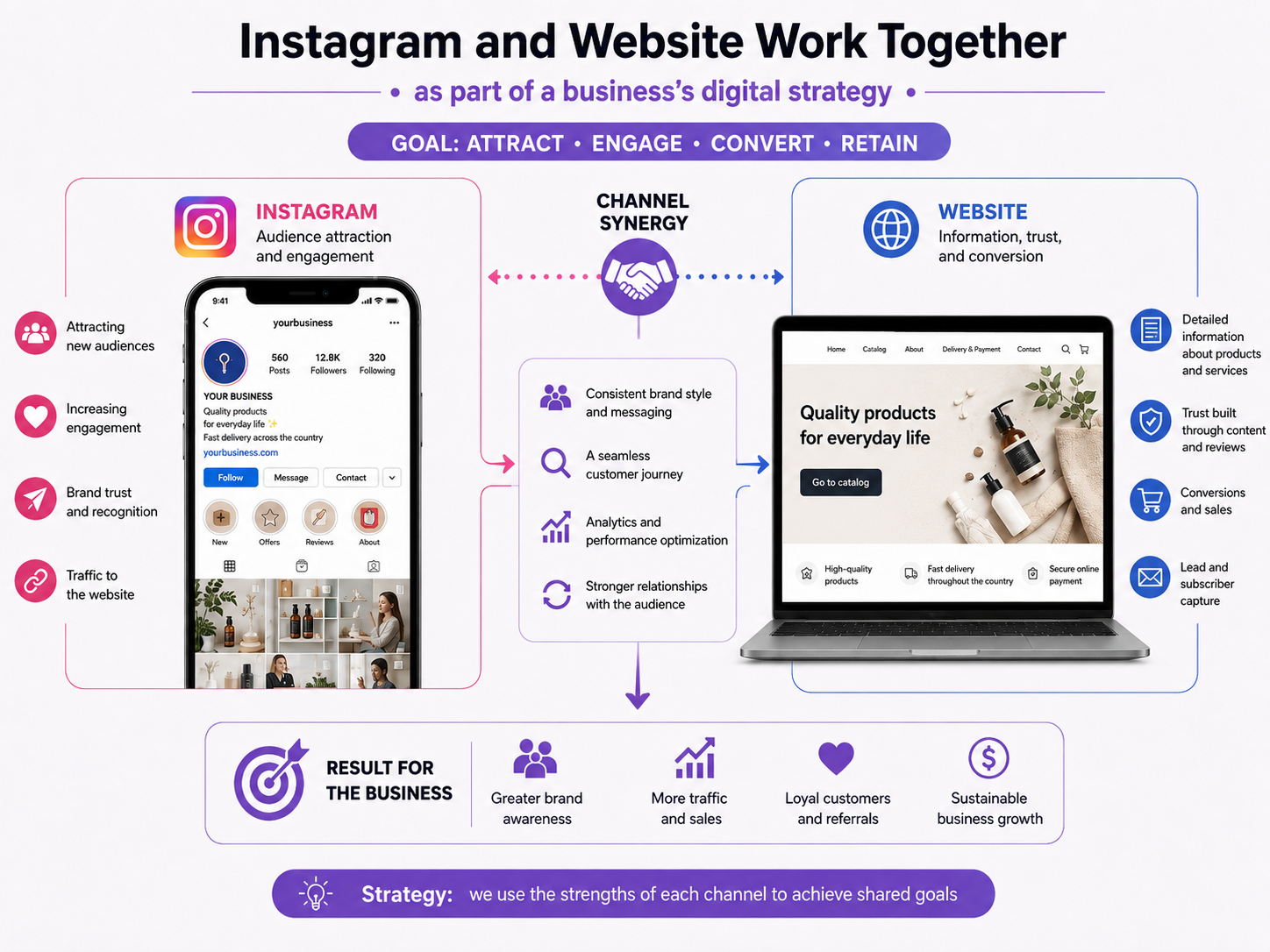
Instagram is primarily a discovery, content, interaction, and community channel. A website can become the central hub of your digital presence, giving you much greater control over how your business is presented and how a potential customer moves toward contacting or buying from you.
For a new entrepreneur who is still validating an idea, Instagram may be enough at first. Once a business needs customers from multiple channels, clearer service information, a more professional presence, lead generation, search visibility, or automated processes, a website becomes much more valuable.
The useful question is not Instagram or a website. It is what job should each channel perform to help my business win customers.
Instagram has strengths a website should not try to replace. It is particularly effective for frequent communication and showing people that a business is active.
That is why abandoning Instagram and relying exclusively on a website is rarely the best move for businesses whose audiences actively use social media.
A website solves a different set of problems. Instead of relying on a continuous stream of posts, it lets you build a permanent structure around your products, services, information, and business goals.
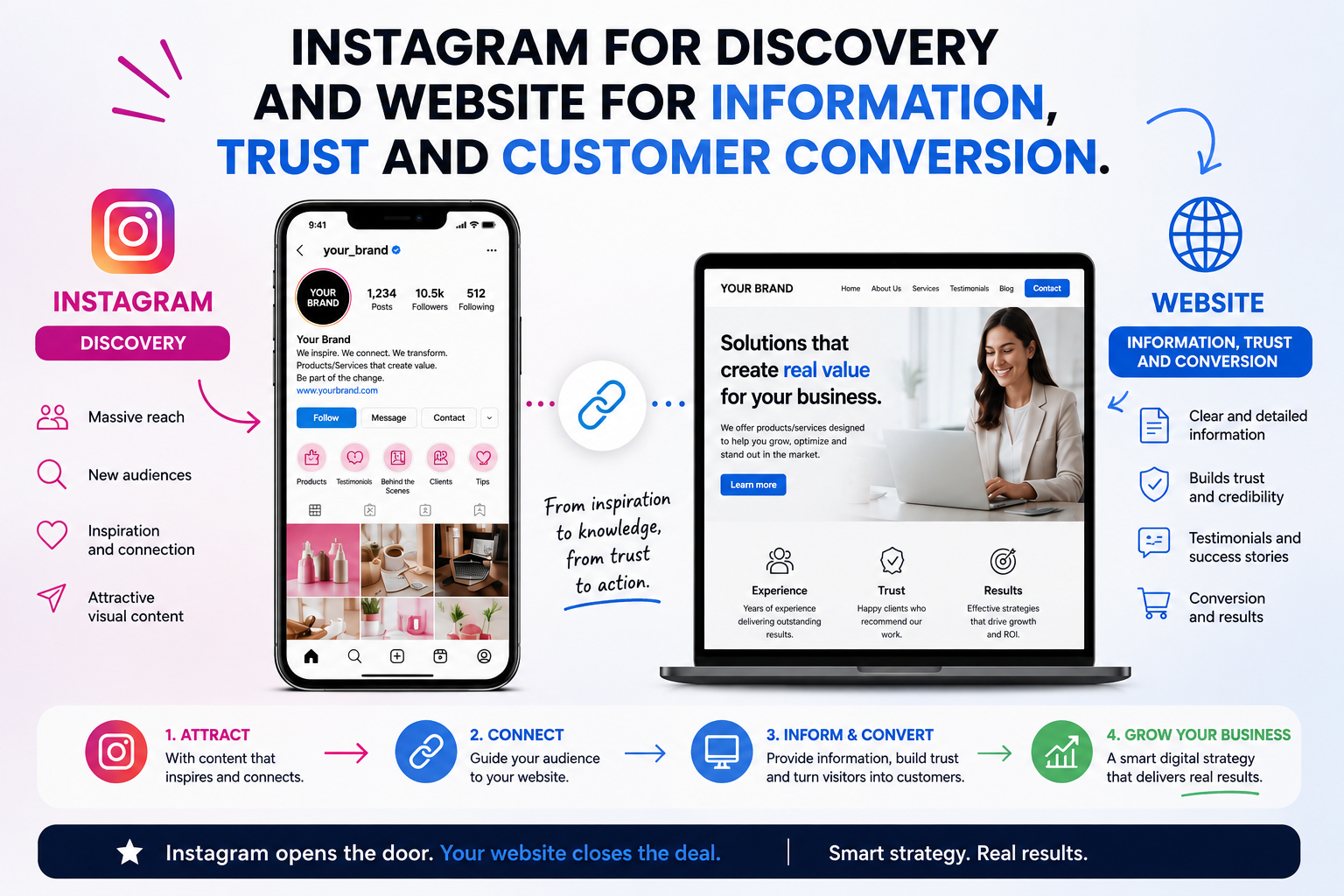
On Instagram, your business operates within a platform that has its own formats, algorithms, policies, and priorities. You can build an excellent audience, but you do not completely control how content is distributed or how visitors navigate your information.
With your own website and domain, you gain significantly more control over the customer experience. Someone interested in web design, for example, can land directly on a dedicated service page, review relevant work, get questions answered, and find a contact button without searching through months of posts.
That journey can also be measured and improved. If many people visit a service page but few contact the business, the message, layout, form, offer, or call to action can be reviewed.
Not every new business needs a complex website immediately. Instagram may be enough temporarily if:
In that situation, validating the offer can be more important than building unnecessary technology. The problem begins when a temporary solution remains the only digital presence of the company long after the business has outgrown it.
A website becomes especially useful when customer questions can no longer be answered comfortably through a bio, Highlight, or DM.
It also matters when you want someone searching for terms such as business app development company, website design for small businesses, corporate photography services, or another high-intent query related to your offer to find a page specifically designed around that need.
You should generally consider a website when you need to:
One common argument needs to be updated: it is no longer accurate to simply say that Instagram does not show up in Google.
Public social content can be discovered through search, and Google now provides Search Console reporting for content from platforms such as Instagram. That makes social content a more meaningful part of search visibility than it once was.
That still does not make an Instagram profile equivalent to a website. An individual social post can satisfy a specific query, while a website can build an entire architecture of service pages, articles, case studies, FAQs, forms, business information, and multiple conversion paths.
The real opportunity is to use both.
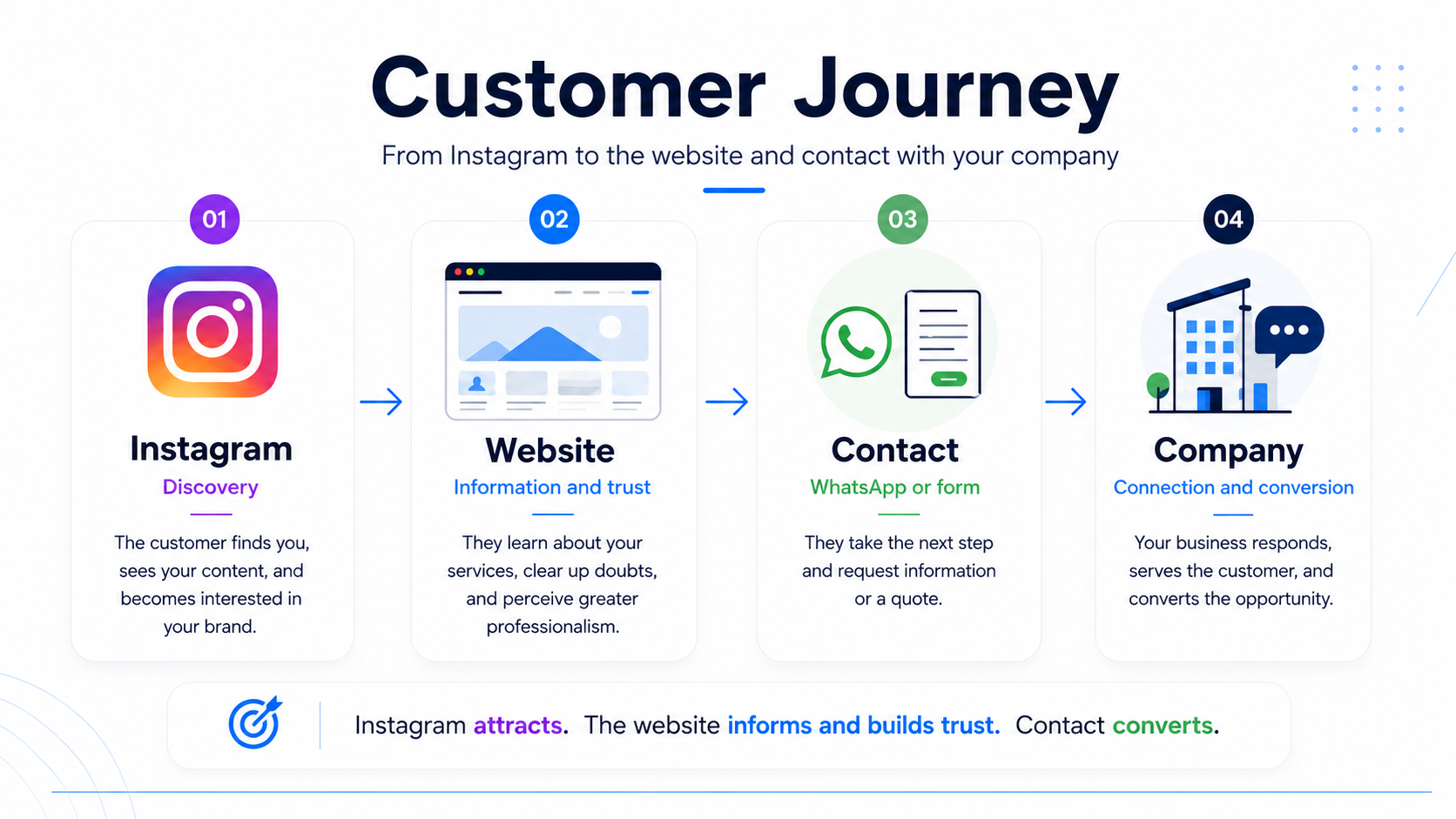
A simple customer journey might look like this:
The journey can also work in reverse. Someone might first discover a service page or article through Google, then visit Instagram to see recent activity, and finally return to the website to make contact.
You do not always need to start with a large project. For many small businesses, a practical foundation can include:
The website can then expand into catalogs, ecommerce, booking, automation, content marketing, private areas, or other functionality when those features genuinely become useful.
If speed is the priority, a professional website template can be the right solution for some businesses. Custom development becomes more appropriate when the company needs a distinctive experience, specialized functionality, integrations, or proprietary workflows.
A website does not automatically generate traffic and does not replace content marketing. It needs promotion, search visibility, and a strategy.
A profile may perform extremely well, but using one channel for all customer acquisition creates unnecessary dependence on that channel.
If someone is interested in a specific service, they should ideally reach a page that addresses that exact need.
Reach and revenue are not the same thing. People need to understand what you offer, why it matters, and what they should do next.
Not every company needs a complex platform. The right solution solves the current problem and leaves room for future growth.
If you are still validating an idea and are not sure whether demand exists, Instagram can be a practical place to start. If you already operate an established business, need a more predictable customer acquisition system, or want to professionalize your presence, it usually makes more sense to use Instagram and a website as parts of one system.
For local businesses, that system may also include Google Business Profile. For ecommerce companies, the website can become the sales hub while social media drives discovery. For professional services and B2B businesses, the website often plays a particularly important role in explaining the offer, establishing credibility, and generating qualified inquiries.
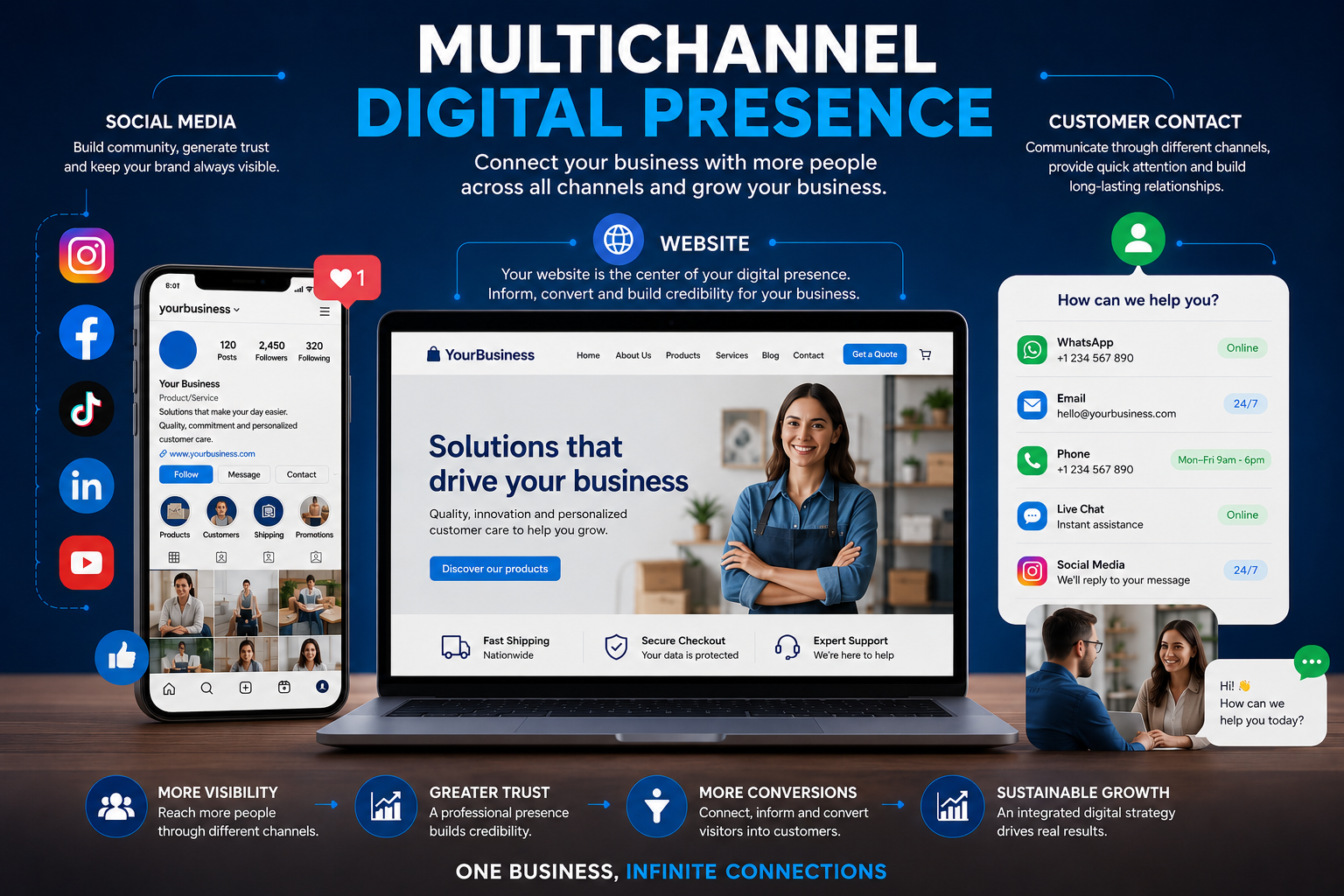
Not necessarily to get started, but a website can diversify customer acquisition, explain your offer more effectively, create better conversion journeys, and reduce dependence on a single channel.
For a very simple business, it may handle much of the process for a while. Once you need multiple services, search visibility, forms, bookings, ecommerce, automation, or deeper content, the differences become much more important.
No. A website alone does not guarantee rankings. Content quality, structure, technical performance, competition, and the usefulness of each page all influence search visibility.
Yes. Content from social platforms such as Instagram can now receive visibility through Google Search. That makes search optimization and social content increasingly complementary rather than completely separate strategies.
It depends on the stage of the business. Social media may be enough to validate an early offer. An operating business with multiple services or an active customer acquisition strategy will usually benefit from planning both channels together.
Pixelgrafía can help determine what your business actually needs, from a straightforward template-based website to custom development, content strategy, social media management, hosting, domains, mobile applications, and broader digital solutions. If you want to turn your online presence into a system designed to generate inquiries and business opportunities, use the form below this article and tell us what you want to achieve.
Complete the form and we will reply as soon as possible.


