

In most cases, yes—but that does not mean every small business needs a large, expensive, or technically complex site. A website becomes useful when customers research before buying, compare providers, verify that a business is legitimate, or need more information before reaching out.
For many businesses, a focused website is enough. It can explain the offer, show who it is for, provide evidence of previous work, clarify the service area, and guide visitors toward one meaningful action.
Instagram, Facebook, TikTok, and messaging apps are valuable channels, but they serve different roles.
Social media can create awareness. Messaging starts a conversation. A website organizes the information customers need to evaluate a business before they contact it.
A website also gives the business its own domain, a structure tailored to the offer, and pages that can appear when people search for specific services, products, or locations.
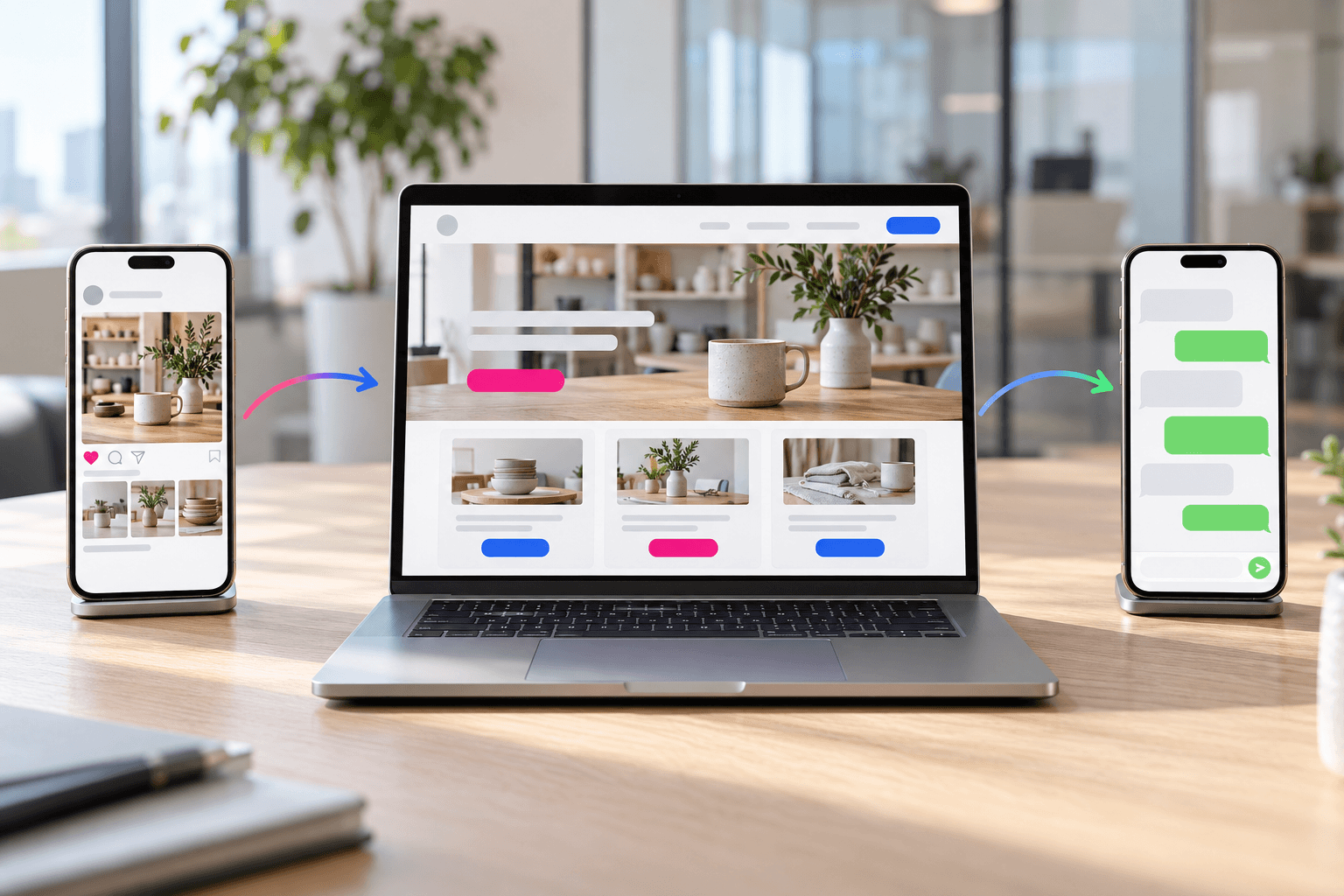
The practical choice is usually not website versus social media. It is a connected system in which social content attracts attention, the website answers questions, and the preferred contact channel moves the opportunity forward.

If every conversation begins with an explanation of services, availability, pricing process, coverage, or next steps, a website can answer those questions before the first message.
This does not remove personal service. It helps each conversation begin with better context and gives the team more time for questions that actually require attention.
A business listing can display contact information, hours, reviews, and location details. A website expands that presence with service pages, case examples, frequently asked questions, forms, and information written for specific customer searches.
Google advises businesses to establish their official website and verify ownership so the company’s site and business information can be understood and represented more accurately in Search.
Potential customers may want to review previous work, understand the process, identify who operates the business, and confirm that the company handles the kind of project they have in mind.
A clear website can bring those signals together. It does not create a reputation by itself, but it makes legitimate experience easier to evaluate.
Social platforms can change reach, features, policies, and account access. A domain gives the business a stable destination for social profiles, ads, email campaigns, QR codes, directory listings, and referrals.
A visitor who understands the service, has seen examples, and knows what happens next can ask more specific questions. A well-structured website helps customers evaluate fit before entering the sales conversation.
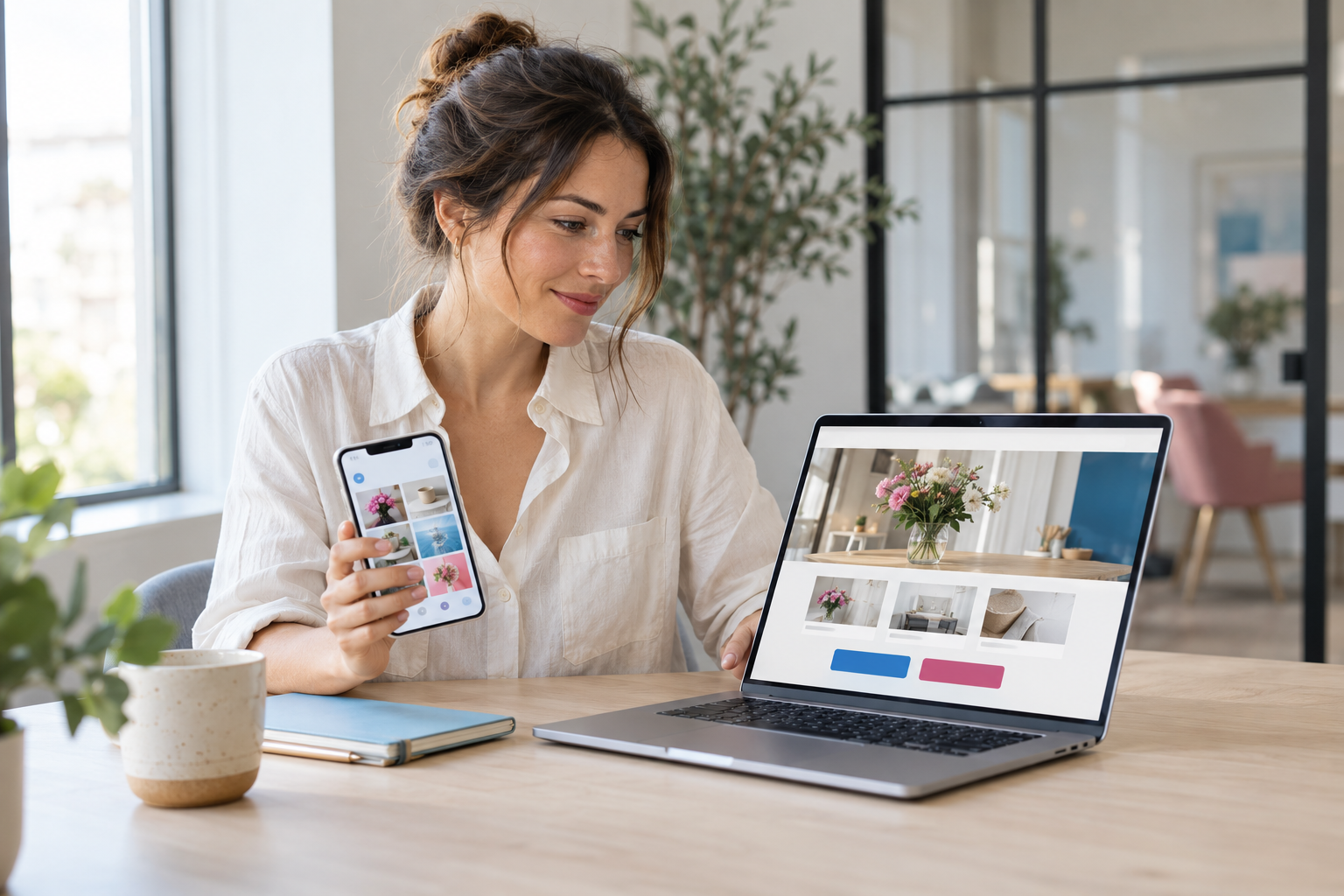
A custom website may not be the first priority if the business is still testing its offer, serving a small referral network, operating temporarily, or unable to maintain essential information.
That does not necessarily mean the business must avoid having its own online destination. A one-page site, an adapted template, or a focused service page can provide the essentials without creating an oversized project.
The better question is not only “Do I need a website?” It is “What should a website accomplish for the business at this stage?”
A small website does not need dozens of pages. It needs to answer the questions that determine whether a visitor continues, contacts the business, or leaves.
Google uses the mobile version of a website for indexing. Mobile usability should therefore be treated as part of the website’s foundation rather than a visual extra.
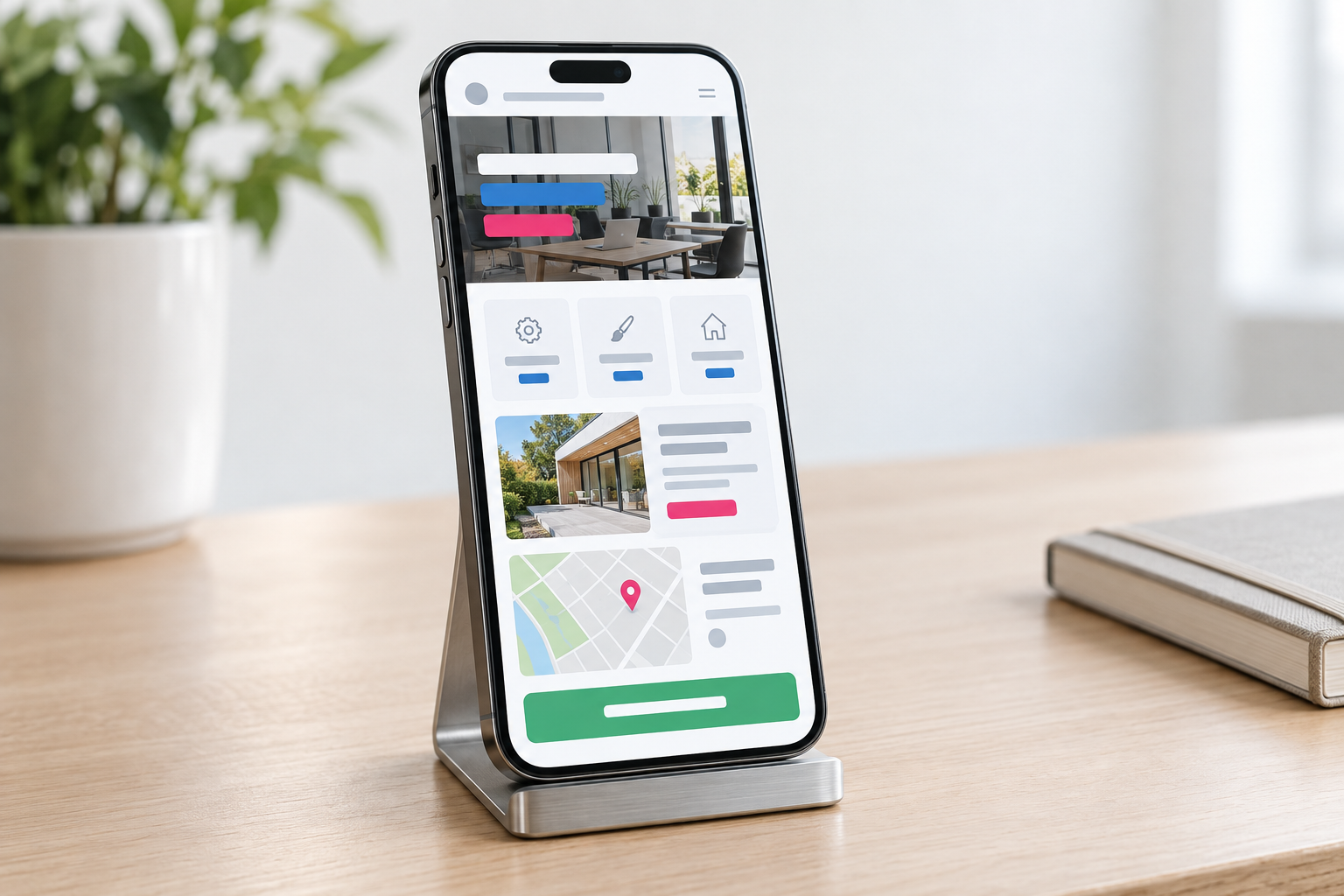
This format often works for professionals, local service providers, and businesses with a focused offer. It can explain the service, address common concerns, and direct visitors to a form or messaging channel.
A template can be a practical choice when the business needs to launch quickly and its requirements match an existing structure. The value comes from adapting the messaging, imagery, brand, commercial information, and calls to action.
Custom development makes sense when the business requires estimates, scheduling, advanced catalogs, private areas, integrations, automation, or a process that standard templates cannot support. Customization should solve a real business requirement.
Launching the site is the beginning. To become a useful business asset, it needs accurate information, relevant traffic, and a way to measure meaningful actions.
A business should know which pages people visit, where those visitors come from, and whether they call, submit a form, request an appointment, buy, or start a conversation.
The message should also remain consistent from one channel to the next. If an ad or social post promotes a specific service, its destination page should continue that promise instead of forcing the visitor to search for the relevant information.
A small business does not need to imitate a large corporation. It needs a site that matches its offer, customer decisions, budget, and operating capacity.
If the immediate goal is to explain one service and receive inquiries, a compact template-based site may be enough. If the company needs to sell, schedule, automate, or connect internal systems, a broader solution may be justified.
Pixelgrafía can help define the appropriate scope before development begins, reducing the risk of building either too little or more than the business can currently use.
Yes, particularly while testing an offer or serving a limited group of customers. A website becomes more valuable when you need searchable information, a portfolio, clearer service explanations, or fewer repetitive inquiries.
Yes, if search engines can access it and the page provides a useful answer to a relevant query. Ranking for multiple services and locations usually requires a broader content structure.
No. A conversion may be a call, appointment, estimate request, store visit, email, or message. The correct action depends on how the business actually sells.
Start with durable information such as services, coverage, process, and contact details. A small, accurate website is more useful than a large site filled with outdated content.
Not sure whether your business needs a one-page site, an adapted template, or custom development? Use the form below to describe your offer. Pixelgrafía will help you identify the most practical option for your current stage.
Complete the form and we will reply as soon as possible.


