

SEO, or search engine optimization, is the work of improving a website so search engines can understand it and surface it for relevant searches. For a business, the goal is to reach people whose needs match what it offers.
A search visit is only the beginning. Your website still needs to explain the offer, answer questions, and make contacting you straightforward. That makes SEO part of a customer acquisition process, rather than a race for a single ranking.
Consider a hypothetical product photography studio. A retailer needs photos for a catalog and searches for a photographer. A service page with relevant work, a clear explanation of the process, and a way to request a quote gives that person something useful to evaluate. A homepage that only says “creative solutions” leaves more questions unanswered.
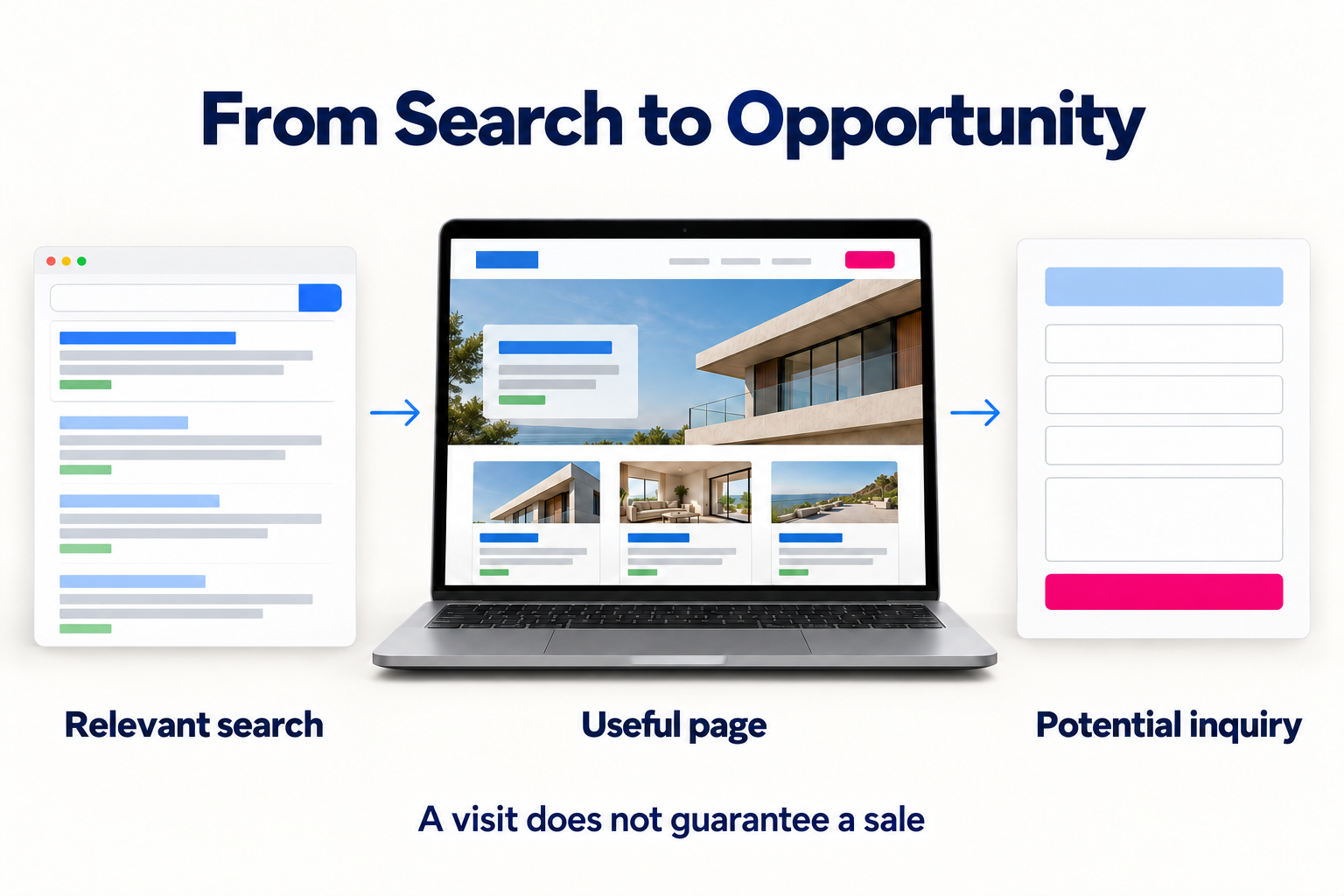
The intended path is search, website visit, and potentially an inquiry. Visitors can leave at any point. The opportunity comes from reaching people with a suitable need, not from assuming every click will become a customer.
SEO focuses on organic search results. Paid search buys advertising placements. Buying Google ads does not buy a better organic ranking.
Organic traffic still has a cost to develop: research, technical fixes, content, and measurement take resources. Advertising and SEO can serve different needs within the same plan; choosing between them requires considering your timeline, budget, and offer.
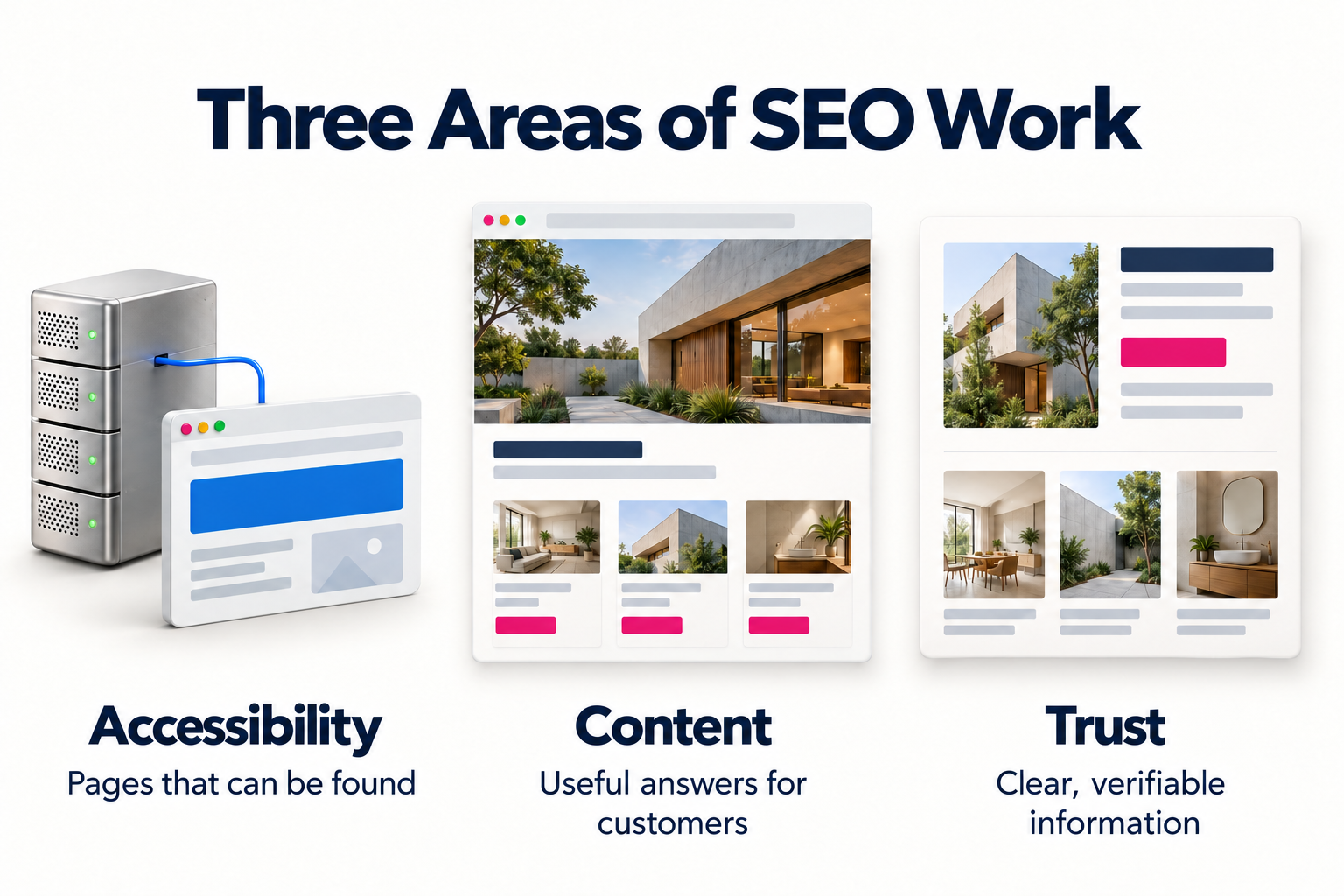
Search engines discover pages, process their content, and select results for a query. Publishing a page does not guarantee its inclusion. Check whether essential pages are reachable through links and whether settings accidentally prevent them from being indexed.
Service pages should explain what you provide, who it is for, relevant conditions, and what happens next. Use descriptive headings and genuine examples. Repeating a search phrase throughout a page does not make an unclear offer more useful.
Identify the business behind the site and provide authentic work samples or testimonials when available. Relevant links from other websites can help people and search engines discover your business. Avoid schemes that sell links primarily to manipulate rankings.
If your business serves a local area and qualifies, an accurate Google Business Profile can also support local visibility. Eligibility and local search competition still matter; a completed profile does not guarantee a leading position.
An existing site may need targeted improvements rather than a rebuild. A suitable template may be enough for a straightforward new site. Custom development becomes appropriate when specific features or business workflows justify it.
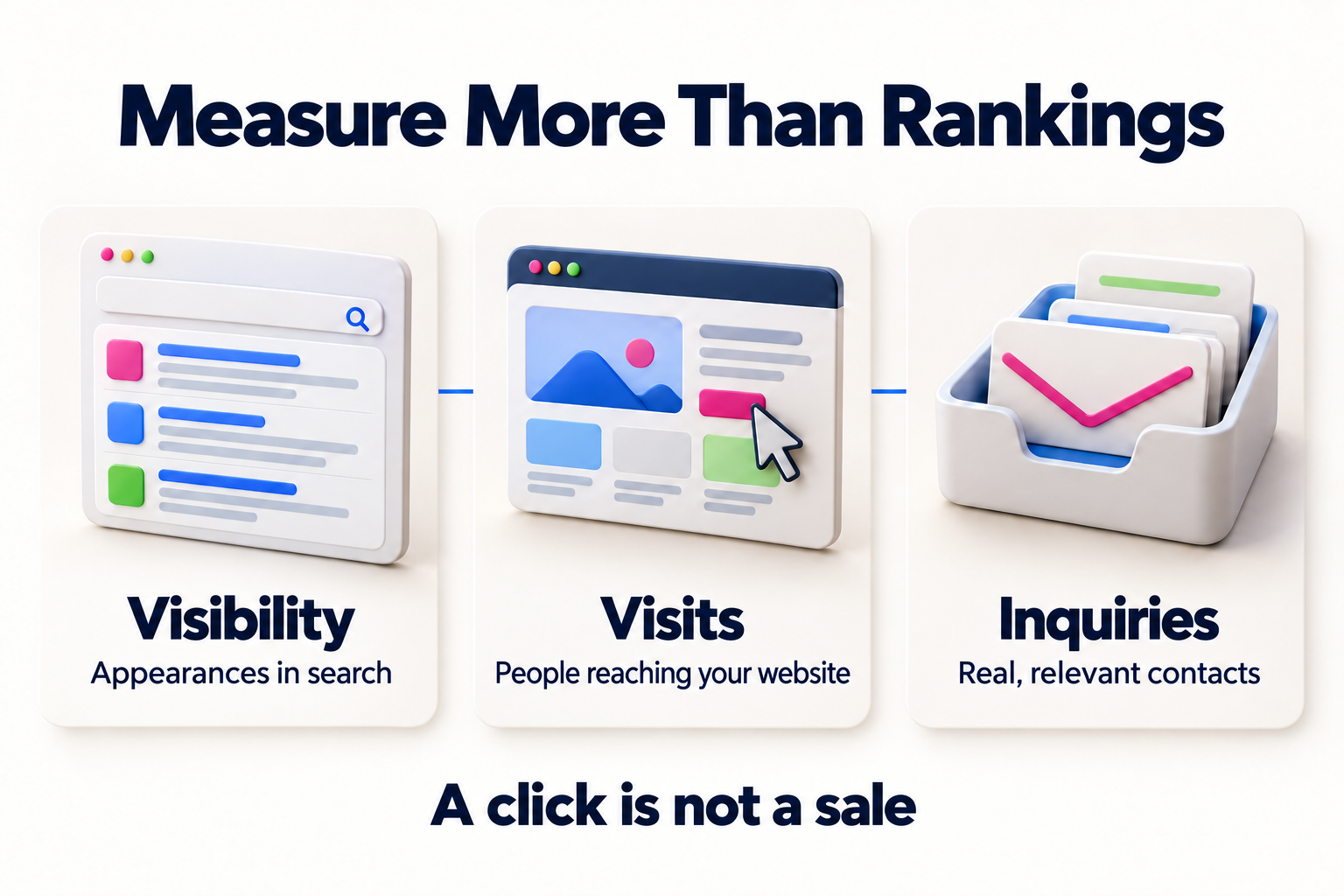
Google Search Console reports impressions, clicks, and search queries. Impressions reflect appearances in search results; clicks record visits from those results. Neither metric is a count of customers.
Connect search reporting with website activity and confirmed inquiries. Separate searches for your business name from searches for services. Compare meaningful time periods and consider seasonal demand. A click on a messaging button is not necessarily a conversation, and an inquiry is not a completed sale.
If visitors arrive but do not contact you, investigate the offer and contact process as well. Conversion improvements can help the business without necessarily being direct search ranking factors.
SUGGESTED INTERNAL LINK: why website visitors are not contacting your business.
There is no universal deadline. Some changes may be noticed quickly; others can take months. The starting point, competition, and work involved all matter. Ask for priorities and a measurement plan, rather than a guaranteed ranking.
No. Start with the pages customers need to evaluate your services. A blog can answer related questions and support those pages when you have useful information to contribute. Publishing frequently is not a substitute for quality.
No. A plugin can help with certain settings, but it cannot define your offer, resolve every technical issue, or replace informed content decisions.
Pixelgrafía can help connect website and content improvements with customer acquisition goals. The starting point should be identifying the obstacle, then deciding whether you need content work, technical fixes, or a broader project.
Contact Pixelgrafía with your website and the service you want to grow so we can discuss what to review first to improve search visibility and make inquiries easier.
Complete the form and we will reply as soon as possible.


