

Choose a business website to explain your company and services, a landing page to focus attention on one offer, and an online store to handle purchases. The right starting point depends on how customers buy and what your team can support afterward.
These are not mutually exclusive categories. A landing page is a web page, and an online store is also a website. Your business may eventually use all three. Here, “business website” means a site that organizes company information, services, work examples, and contact options.
| Format | Main purpose | When to consider it |
|---|---|---|
| Business website | Explain the business, build trust, and support inquiries | You offer several services or customers need to evaluate your company |
| Landing page | Guide visitors toward an action tied to one offer | You are promoting a specific service, campaign, or launch |
| Online store | Let customers select products and place orders | Your offering and operations are ready for online selling |
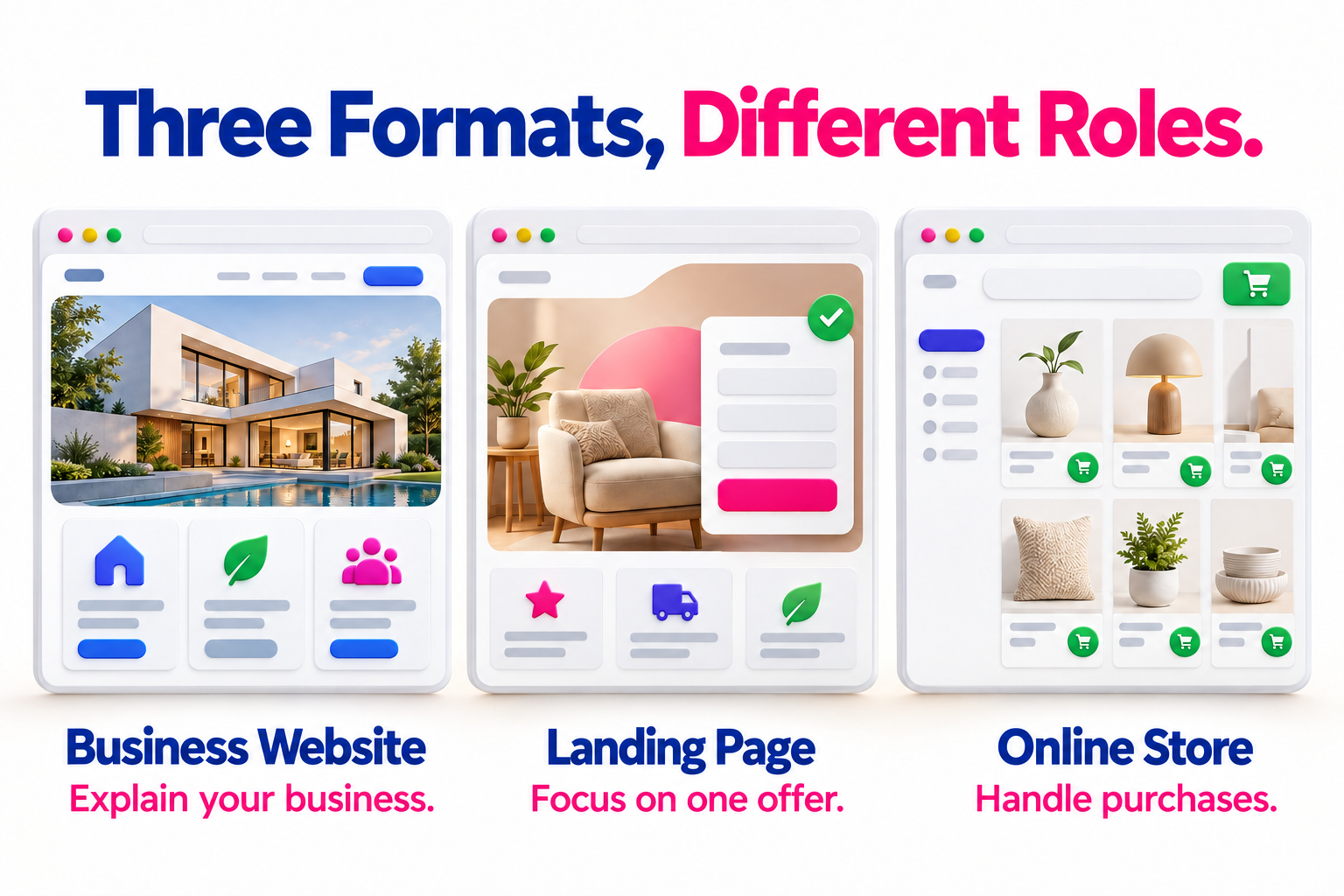
A business website is useful when someone needs to understand several aspects of your company before contacting you: what you do, who you help, how you work, and what experience you can demonstrate.
It might include service pages, project examples, company information, FAQs, and contact details. More pages are not automatically better. The structure should match the questions customers need answered.
For a hypothetical example, a studio offering product photography, corporate video, and drone footage may need a separate page for each service. Each audience can then find relevant work and understand the scope without sorting through unrelated offers.
The commercial outcome might be a quote request, a call, or an appointment. A website can support sales without taking payment directly.
A landing page is a destination page. In campaign planning, it usually focuses on a particular offer and a primary action, such as requesting information, signing up, booking, or buying.
Its message should continue the promise made in the ad, email, or social post that brought the visitor there. If you promote a photography package for restaurants, the page should explain that package, show relevant examples, and make the next step clear.
A landing page can live within your existing website. It does not require a separate domain or, by definition, the removal of every navigation link. Reduce unnecessary distractions while keeping essential trust information and terms accessible.
A one-page website is not automatically a campaign landing page. A long page introducing the entire company may serve a broader purpose even though it has only one address.
An online store lets customers explore products, choose options, and place orders through a purchasing process. Depending on the business, it may support a cart, payment, pickup, shipping, or digital delivery.
The work extends beyond publishing product photos. You need accurate descriptions, availability, pricing, and terms, plus a process for fulfilling orders, answering questions, and handling problems.
Consider two hypothetical situations. A brand with defined products and organized delivery may be ready for direct online orders. A company pricing every project by measurements, materials, and installation may need a quote-request catalog first.
Product listings with a messaging button do not, on their own, provide order management. That approach can still be useful, but the project scope and success measures should reflect what it actually does.
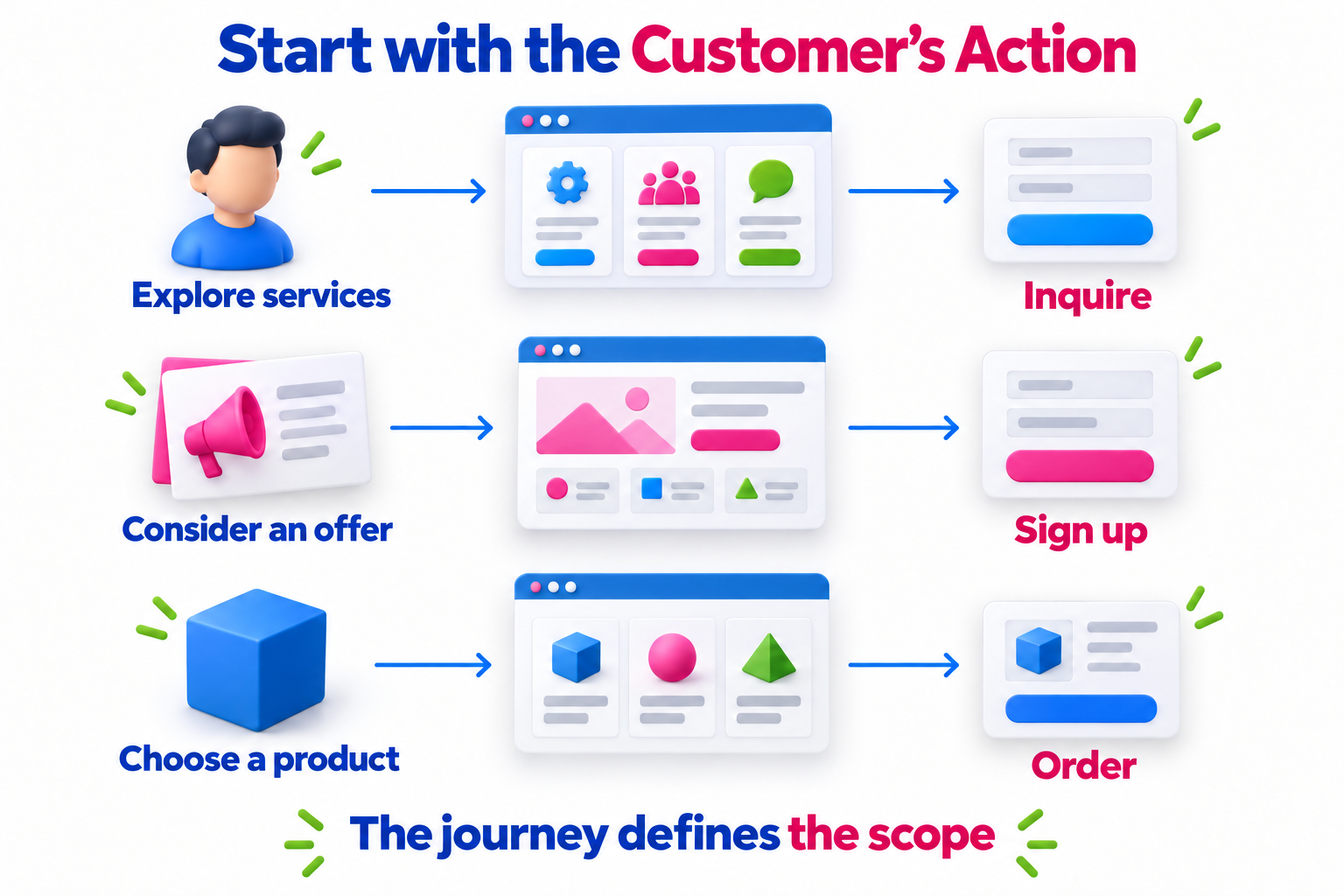
You can keep a business website, add a campaign landing page, and introduce a store when direct sales are operationally ready. A store can also include service pages and dedicated campaign pages.
Plan for growth through content structure, administration, integrations, and access to your data. Expanding a site is not always a matter of switching on a feature. Some initial choices may require additional work or migration later.
An adapted template may be enough to present services or launch an offer. An established ecommerce platform may support a standard purchasing process. Custom development becomes useful when your rules, integrations, or workflows cannot be handled adequately by available options.
Look beyond page count. Ask the proposal to specify content, mobile layouts, forms, catalog setup, purchasing features, and the integrations your business actually needs.
Separate initial work from domain registration, hosting or platform fees, licenses, maintenance, and any payment-provider charges. Clarify what each service includes and who controls the accounts and data.
Before launch, test the complete journey on a phone. Submit an inquiry and confirm that it arrives. For a store, place a test order and check confirmation, payment, and fulfillment arrangements as applicable.
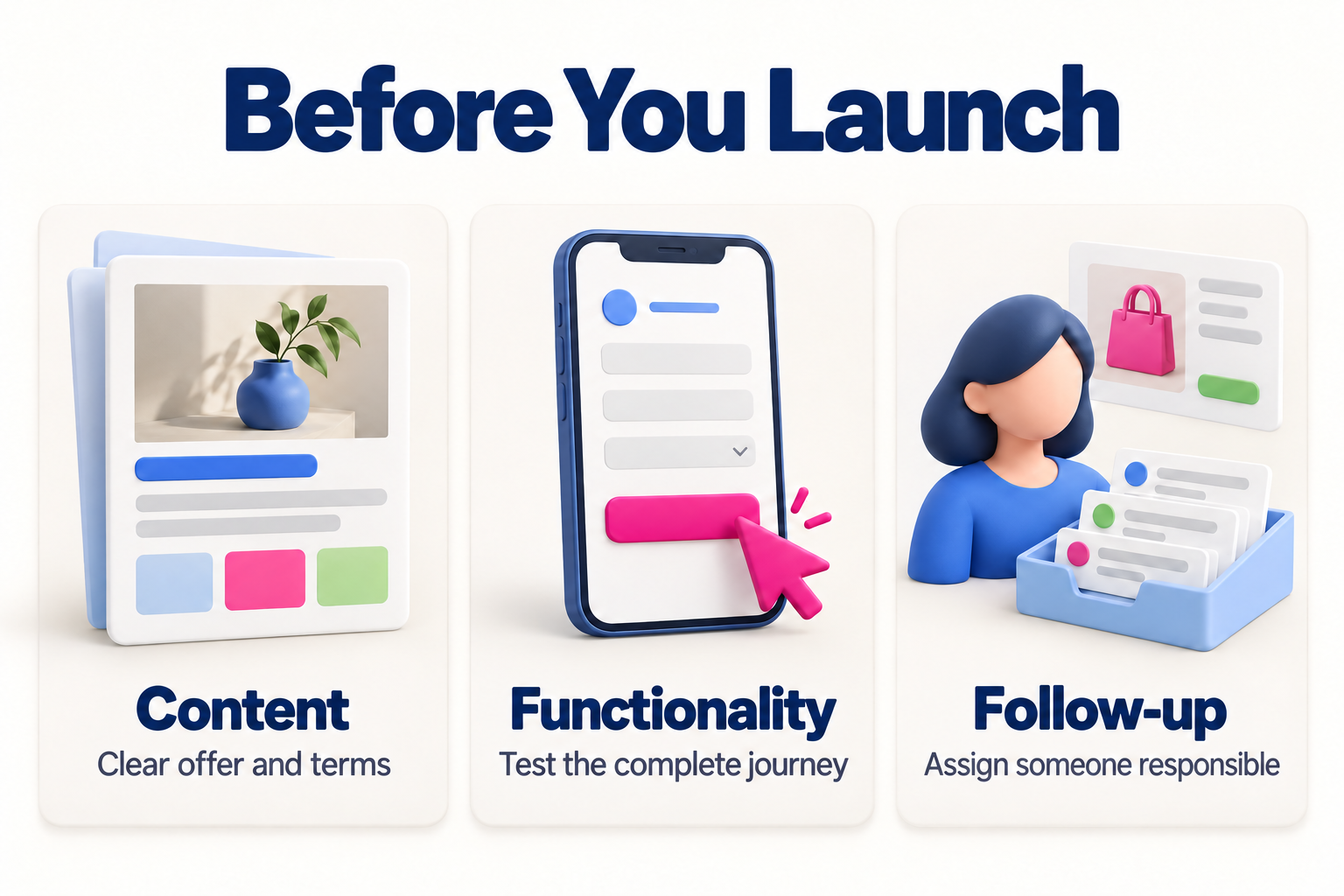
Measure the job you designed the site to do: relevant inquiries for a service website, completed actions for a landing page, and properly handled orders for a store. Visits and clicks provide context but do not replace those outcomes.
If you already have a website, investigate its obstacles before replacing it. Read more about turning your website into a lead generation tool.
Yes. The page can explain the offer and connect to a purchasing process. You still need to handle orders, payment where applicable, and delivery. A small catalog does not remove those responsibilities.
It depends on scope. A landing page with complex integrations and extensive content work can require more effort than a simple website. Compare equivalent requirements and include ongoing expenses.
Yes, if it can be indexed and is relevant to a search. That does not guarantee rankings or replace a broader content structure when you need to address several different needs.
Pixelgrafía can help define an appropriate format and scope, from an adapted template to an online store or a website with custom functionality.
Want to choose before you invest? Tell us what you sell and how customers buy from you, and let’s assess what your business needs.
Complete the form and we will reply as soon as possible.


