

Turning a business idea into an app starts with identifying a user, understanding a problem, and defining a first release that helps someone complete a useful task. Those decisions give you a foundation for choosing how to build, test, and operate the product.
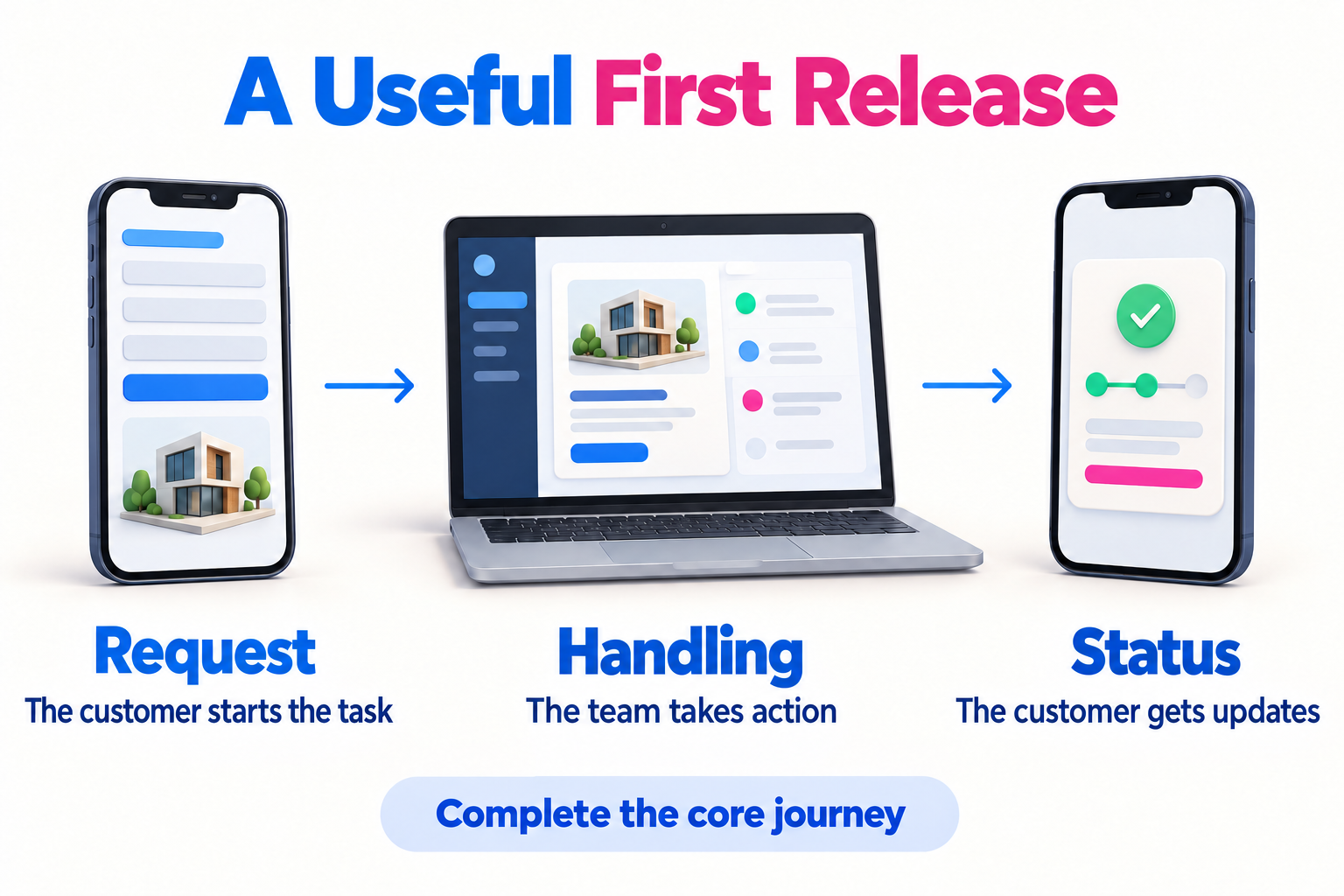
Before requesting estimates, translate your idea into something a development team can evaluate. “I want a services app” leaves the scope open. “Customers should request a visit, attach photos, and track the job” describes a concrete starting point.
If you are still deciding whether an app is the right solution, begin with these eight questions to determine whether your business needs a mobile app. This guide focuses on turning an identified need into a workable project.
Choose a specific audience with a recognizable need. Trying to serve customers, suppliers, and businesses across multiple industries from the outset makes priorities harder to establish.
Consider a hypothetical property maintenance company. Customers report issues through separate message threads, leaving staff to find photos and request missing details. The opportunity is to organize requests and make their progress visible.
Describe the idea in one sentence: help a specific person complete a task and overcome an identified difficulty. Then explain how that person handles the task today and what would make switching worthwhile.
Talk to people who have experienced the problem. Ask about the last time it happened, what they did, where they struggled, and which tools they used. Recent experiences are generally more informative than asking whether someone likes your concept.
You can also run a manual pilot: collect requests with an existing tool and deliver the service without building an app yet. This helps you examine both demand and the work required behind the scenes.
Treat positive feedback, registrations, and purchases as different signals. Decide in advance what evidence would support moving forward, changing the proposal, or stopping. There is no universal number of interviews or sign-ups that validates every business.
Your business needs to deliver what the app promises. In the maintenance example, someone must review requests, assign a professional, update the status, and respond when a visit cannot go ahead.
Identify who uses the service, who pays, and who performs the work. For an internal app, define the intended operational improvement, such as fewer errors, easier access to information, or less time spent on a task.
Also decide how you will reach your initial users and who will answer their questions. Publishing an app does not automatically create an audience.
A minimum viable product, or MVP, is an initial version with enough functionality to test a proposition with real users. Its purpose is to support learning through actual use.
For the hypothetical maintenance business, the initial journey could be:
Automated recommendations, loyalty points, and expansion into other industries could wait. Separate features into essential, later, and still unproven.
A smaller scope still needs appropriate security, permissions, accessibility, and a reliable core workflow. An initial release should perform its intended job properly.
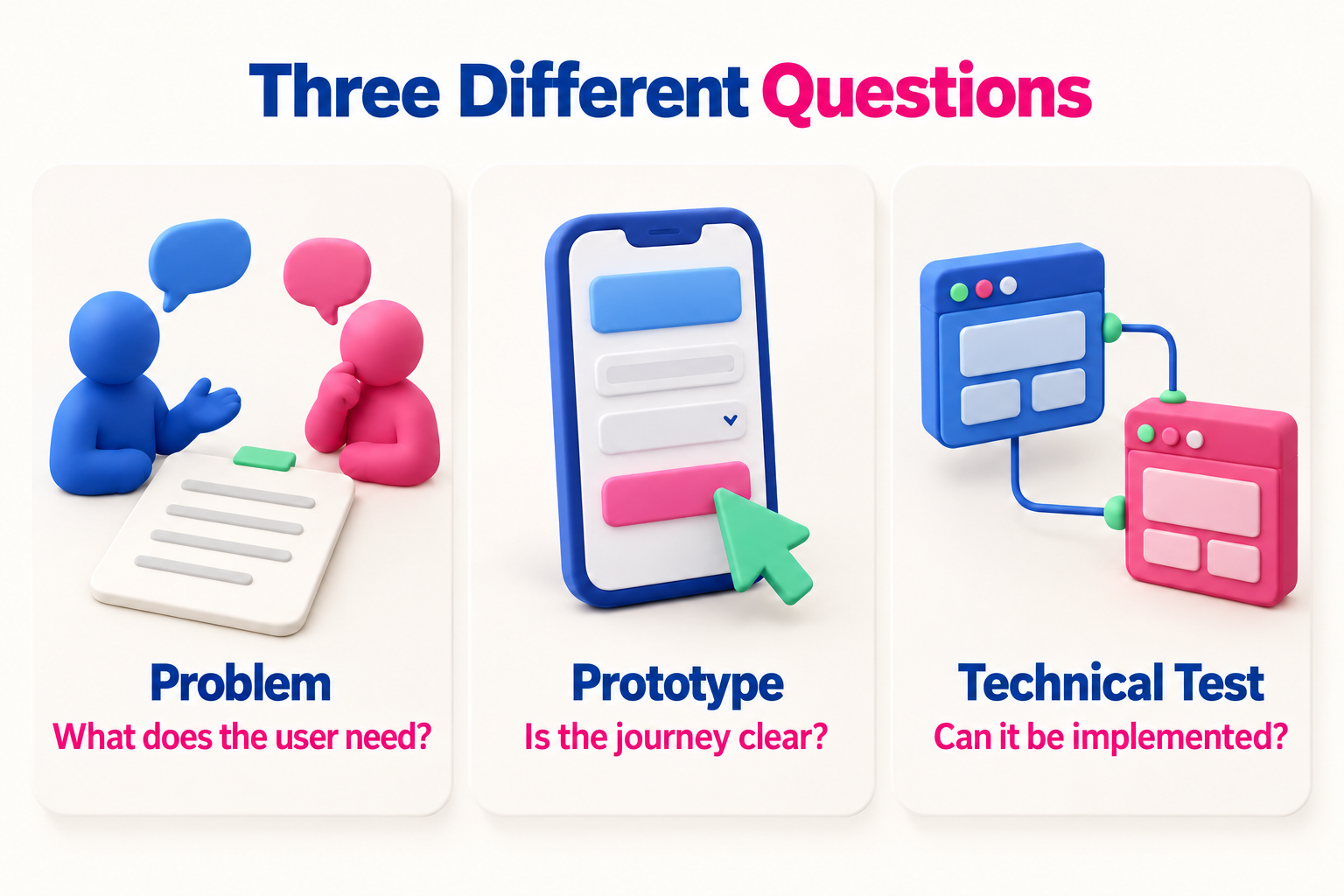
A prototype represents screens and interactions before the complete product is built. Ask potential users to carry out a task, then observe where they hesitate, what they misunderstand, and which information they need.
The GOV.UK prototyping guide describes options ranging from paper sketches to interactive prototypes. Prototype code should not automatically become production code.
Investigate major technical uncertainties separately. For example, check whether the company’s existing management system can receive requests and return status updates. A convincing screen does not establish that an integration will work.
Before selecting technology, compare existing software, a web application, and custom development. The right approach depends on required capabilities, user devices, integrations, and the limitations of each option.
Prepare a short project brief covering:
A concrete acceptance criterion might be: “Submitting a valid request creates one record, displays it in the staff dashboard, and lets the customer view its status.”
Ask estimates to distinguish initial development, third-party services, infrastructure, maintenance, and future improvements. Agree on ownership and access to accounts, data, and source code. Dependencies and scope changes can affect the schedule.
Review functional versions throughout development. Test the complete journey, including invalid form entries, incorrect permissions, duplicate submissions, and connection problems. Involve both end users and the people who will handle incoming requests.
Before launch, assign support responsibilities and establish how incidents and recovery will be handled. If you plan to distribute through app stores, check their current requirements and allow for the review process.
A limited launch can expose operational difficulties before you expand access. Choose participants who represent your intended audience.
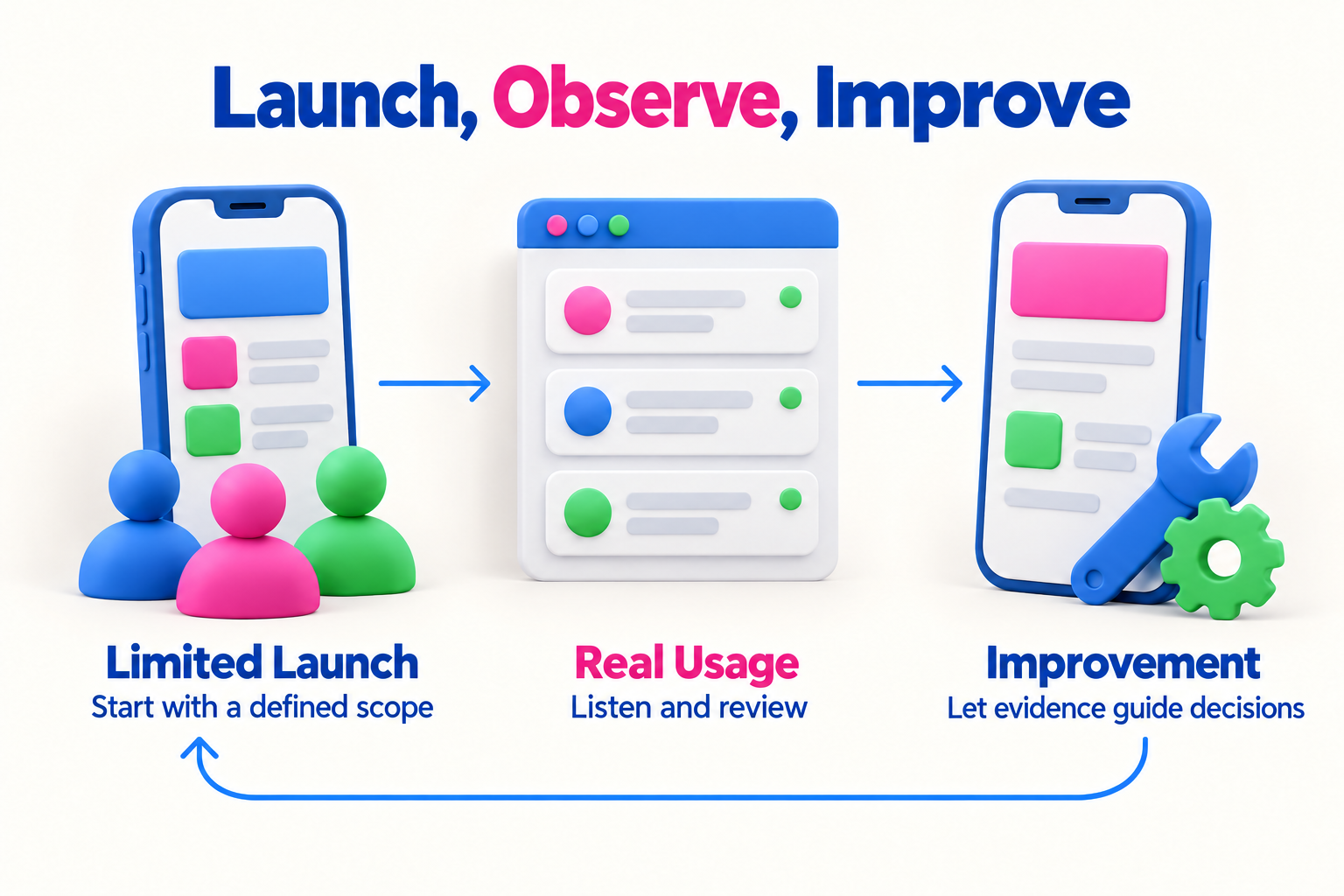
Track measures connected to the task: completed requests, errors, handling time, or requests for help. If you are improving an existing process, establish a baseline before making comparisons.
Usage data helps you see what happens; conversations help explain why. Someone might abandon a task because of a confusing screen, a service condition, or an unmet need.
Plan resources for fixes, compatibility updates, and integration maintenance. Add capabilities when you have a clear reason to do so.
No. You can investigate the problem and define the project without coding. Evaluating technical choices and building a reliable product will require the right capabilities, whether in-house or through a development partner.
That depends on your audience’s devices and the pilot requirements. Starting with fewer platforms can make sense if you can test the proposition without excluding essential users.
There is no single figure that applies to every project. Workflows, integrations, data, platforms, and testing shape the workload. A defined scope supports an estimate with explicit assumptions and exclusions.
Tell Pixelgrafía what problem you want to solve and who will use your app so we can discuss the next step and the initial scope of your project.
Complete the form and we will reply as soon as possible.


