

Uber is an on demand transportation service which has brought a revolution in the taxi industry all across the world. The business model has made it possible for people to simply tap their smartphone and have a cab arrive at their location in the minimum possible time, leaving a lot of budding startups yearning for an App like Uber and wondering how Uber works.
Uber is one of those few tech companies in the world that has been valued over $70 Billion. Uber has already received an equity funding of $22.2B and is present in 633 cities worldwide. These facts surely show the trust of investors in the business model and make it easy for us to imagine how much revenue will the organisation be making once it attains liquidity.
In this post, we have highlighted some unknown facts and figures along with a detailed explanation about the model by which Uber earns money and how uber works. Uber’s customer segments, value propositions, key problems, solutions, cost structure and revenue model have also been discussed. For budding entrepreneurs, we have catered to the rise of ‘uber for x’ startups and what you should be looking for in this space. Read on!
Founders: Travis Kalanick and Garrett Camp.
Company Headquarters: San Francisco, California, United States.
Funding received by Uber: $22.2 Billion. (as of December 2017).
Company Valuation: Over $70 Billion.
Number of Users: More than 50 Million.
Number of registered drivers: Approximately 7 Million (as of November 2017).
Average number of daily Uber Trips: 1 Million
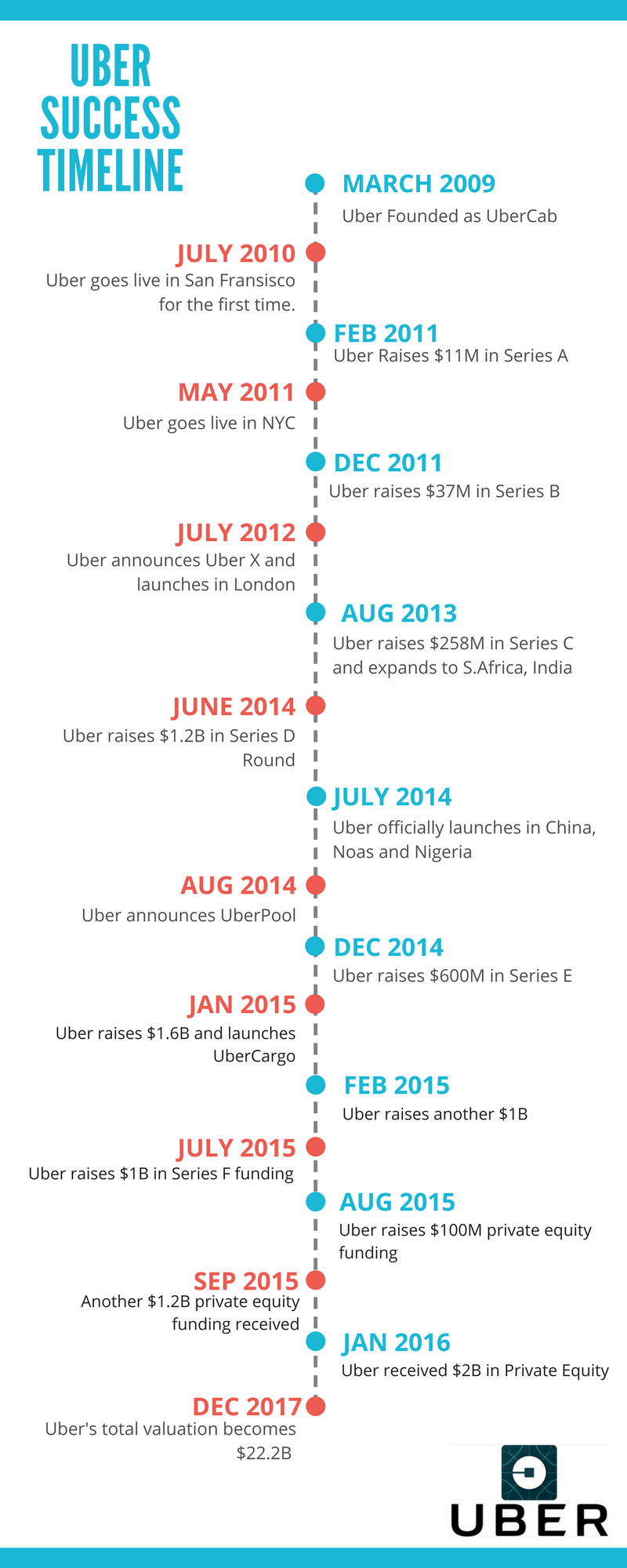
Uber Success Timeline
If you have ever travelled in a taxi, you might have paid the driver in cash at the end of your journey. The cash collected by each journey is the only source of revenue for a traditional cab company. Uber is no different. Neither does Uber have a different revenue model than the one mentioned above nor it has any other source of revenue as of now. But just imagine 1 million rides a day. It will help you calculate those big numbers that the company earns. Let’s dig a little deeper to understand Uber’s source of income and see how uber works
If you’re wondering what is Uber technologies fee, what has made them so successful is the fact that the revenue model is as unique as their business model. See how uber works:
Uber has not limited itself to a particular segment of cars or to a particular segment of people. There is Uber X, Uber Black for those who love to travel in a black car, Uber Taxi for those looking for cost-efficient solutions and Uber SUV for those who want luxury.
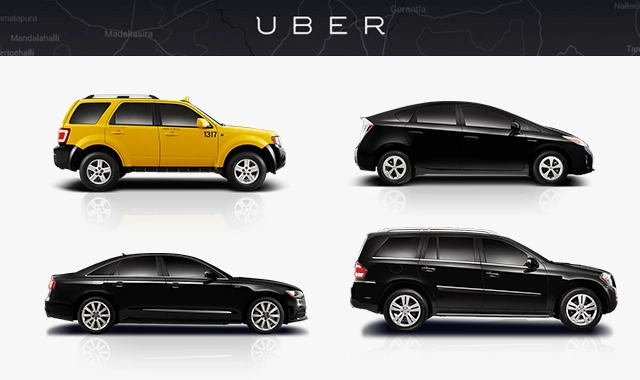
Uber’s Offerings
Variation in cab fares according to the situation is an important aspect of their business model. Whenever the demand increases, per mile prices, are automatically increased. The new price depends on the number of available drivers and the number of requests made by people who want to travel. It has applied for a price surge technology patent in the US.
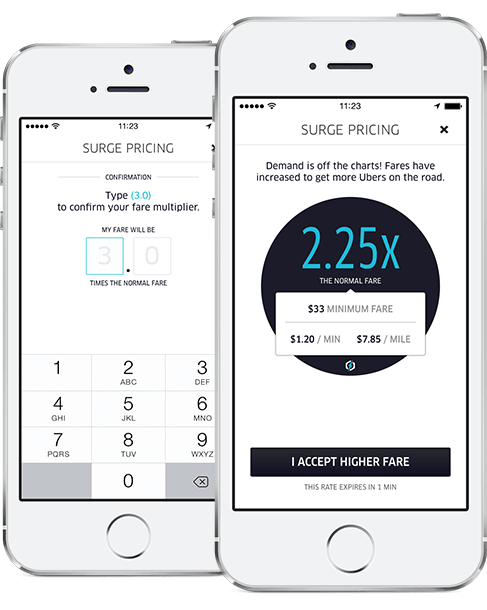
Uber Surge Pricing
Uber has come a long way from cabs. It now offers boats, helicopters, as well as some other transportation, means on demand. They recently launched a motorcycle-pickup service in Paris, a delivery service in San Francisco, and an ice-cream-truck-delivery service in a few cities too. However, these means are available in selected geographical locations but it has led them to add new streams of revenue into its business model.
If you want to see a clone for uber like app, click here, You can begin you own taxi businees in only 45 days!
Uber has such a vast customer segment that it has got something on offer for everyone. From Uber Taxis to Uber Black and from Uber X to Uber SUV, the company has got a vast range for its customers to make a choice.
Uber serves professionals as they hire an Uber cab to and fro work. For this Uber did few tie-ups with corporates in the beginning and does so when it launches in a new city in a new country. Apart from professionals, Uber tries to touch the hearts of people by offering special services like:
Uber for Kids: A special service from Uber dedicated to parents who want their kids to reach home from school in an Uber cab.
Uber for Senior Citizens: Another special service from Uber where it targets senior citizens. As per the statistics, Senior citizens make for up to 30% to 40% of total rides in many cities. This made Uber have some special features for seniors and hence attract more senior citizens on the platform.

Uber for Senior Citizens
All this might raise another question in your mind. The question about how does Uberfind them or how does it market out to its target audience? We extended our research beyond Uber business model and came up with an entire growth model of Uber and some insights about how you can build an Uber like App.
In less than 6 years, Uber has managed to become the best example of a city-by-city mobile service company roll-out. Many generic pointers that I talked about in this Blog Post regarding scaling User Acquisition efforts for On Demand platforms borrows elements right from Uber’s playbook.
Let’s try to decode Uber’s Playbook and how it plays out as it launches in a new city or a country:
The underlying principle here is that for every city it launches, it faces the same chicken and egg problem. The advantages that Uber has as compared to new startups in this space are:
Everything starts with a small city launch team. Every city has a general manager who heads the customer acquisition as well as driver acquisition. The first cabs to come on board are generally professional drivers who are already associated with local taxi companies and have their own cars.
First customers come from various local advertising channels like FM radio, newspapers, online advertising etc. Uber is such a large name that people are already waiting for the cab company to start services in their city.
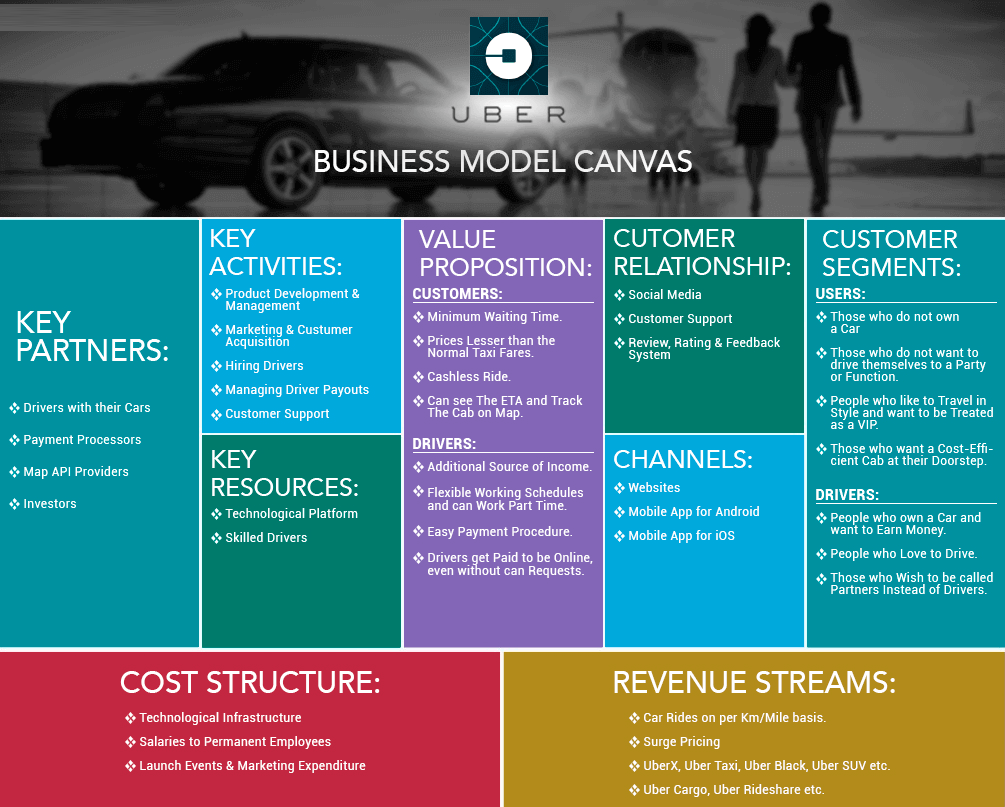
Uber Business Canvas- Understand to make an app like Uber
Uber’s business and revenue model just can’t be stated as complete if this widely asked question about their successful journey is not answered. There were certain factors that led to Uber’s success. Here’s a brief journey that Uber went through when it launched. The similar journey can be followed by any startup which aims to make it as big as Uber.
Earlier, people had to stand on the street side and wave their hand in order to signal a taxi to stop. The wait time, the inconvenience and high rates were a problem for everyone. Quite a few taxis were available and drivers/taxi companies used to charge whatever they thought was right. There was no control on prices and people were left with no other option. Apart from this, the situation was worse during peak hours as it was quite hard to find an empty cab.
Uber recognised the ongoing problem in regard to booking a taxi and gave a technological solution through a mobile app. The solution to book a cab by tapping a smartphone brought a revolution in the taxi industry. The app was officially launched in 2010 and soon became popular due to the value it provided to people.
It is quite difficult to market a newly launched product or service in any geographical area. What gave it the edge is that it launched in San Francisco, a city which is home to tech-savvy people. The first drivers on the platform came through cold calling. Many of them were professional drivers with other cab companies or were self-employed as a taxi driver.
To get their first customers, they took to social media and other mass marketing means. It offered discounts, free rides and rates that were too less as compared to other cab services in the city. The first customers were those who enthusiastically wanted to try a new service. It offered riders from club venues to user’s doorstep so the party people were amazed. It offered rides to the corporate sector who worked in offices helping them to save time.
Whosoever took a ride in Uber was baffled by the first-hand experience. This made the early users become regular customers and they also helped spread the name by word of mouth advertising. This word of mouth advertising was one of the major driving force
Lawsuits: Uber has pending lawsuits in courts of New York and San Francisco. According to Uber, all drivers working for it are its partners while the court says that they are employees. Uber is not the only company facing such a problem but in fact, almost all companies who hire 1099 workforce are under the scanner.
Chicken & Egg problem (New city Launch): Uber faces the chicken and egg problem whenever it launches in a new city. Acquisition of customers as well as partnering with new drivers is not an easy task. To solve this problem, a marketing team starts working in a new city by reaching out to professional drivers. Soon, online and offline marketing is initiated. Discounts are always the main USP to woo customers in the starting stage.
Trust and Safety Issues: There have been cases where Uber drivers have acted rude to passengers. Some cases where Uber drivers have outraged the modesty of female passengers have come to the limelight. This is a big challenge for Uber. Although the company takes all steps such as police verification of drivers and their ID details but still such cases cannot be ruled out completely.
There’s no doubt in the fact that Uber has brought a revolution not just as a taxi company but as a business model where businesses reach out to serve customers at their location. A lot of startups have already made their app like Uber and many others have made small iterations to launch startups in various industry verticals.
Want to create an App like Uber? Get in touch with us and know how we can help you build the next big thing!
Complete the form and we will reply as soon as possible.


