

Imagine this situation. Someone needs exactly the product or service your company offers. They know you exist because someone told them about you, they saw a post on Instagram, or they simply came across your business name. So they do something very simple: they search for you online. But they do not find a website. Or they find incomplete information.
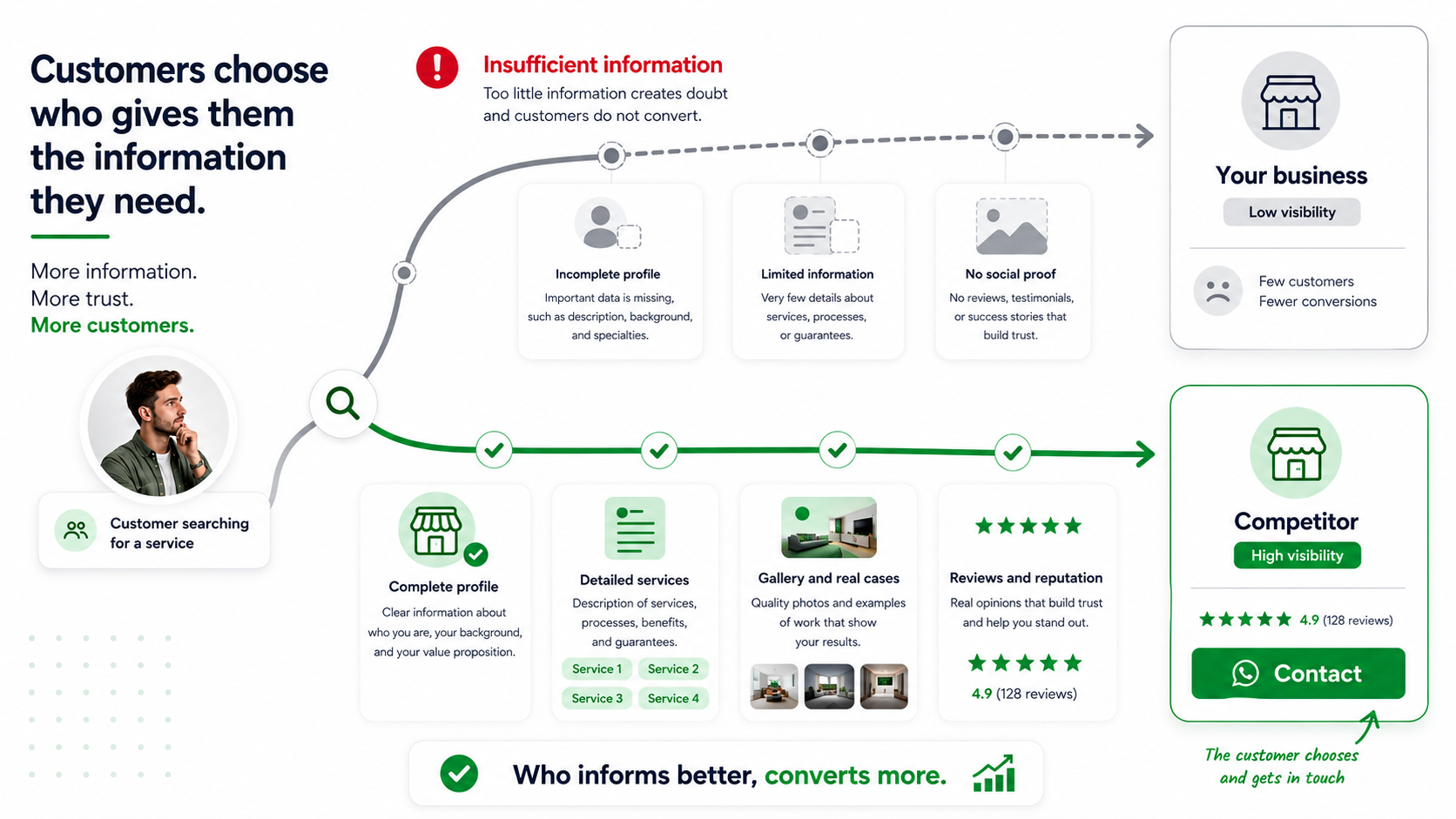
Maybe they discover an outdated Instagram profile, a phone number, a few photographs, or an old website that does not clearly explain what you do. The person keeps searching. They find another company. It has a professional website, explains its services, showcases completed work, answers the main questions, and has a button to contact the business directly through WhatsApp.
Who do you think they will contact first?
That is one of the least discussed problems when a company asks itself:
“Do I really need a website for my business?”
The question should not only be how much it costs to have a website.
We should also ask ourselves:
How much could not having one cost a business?
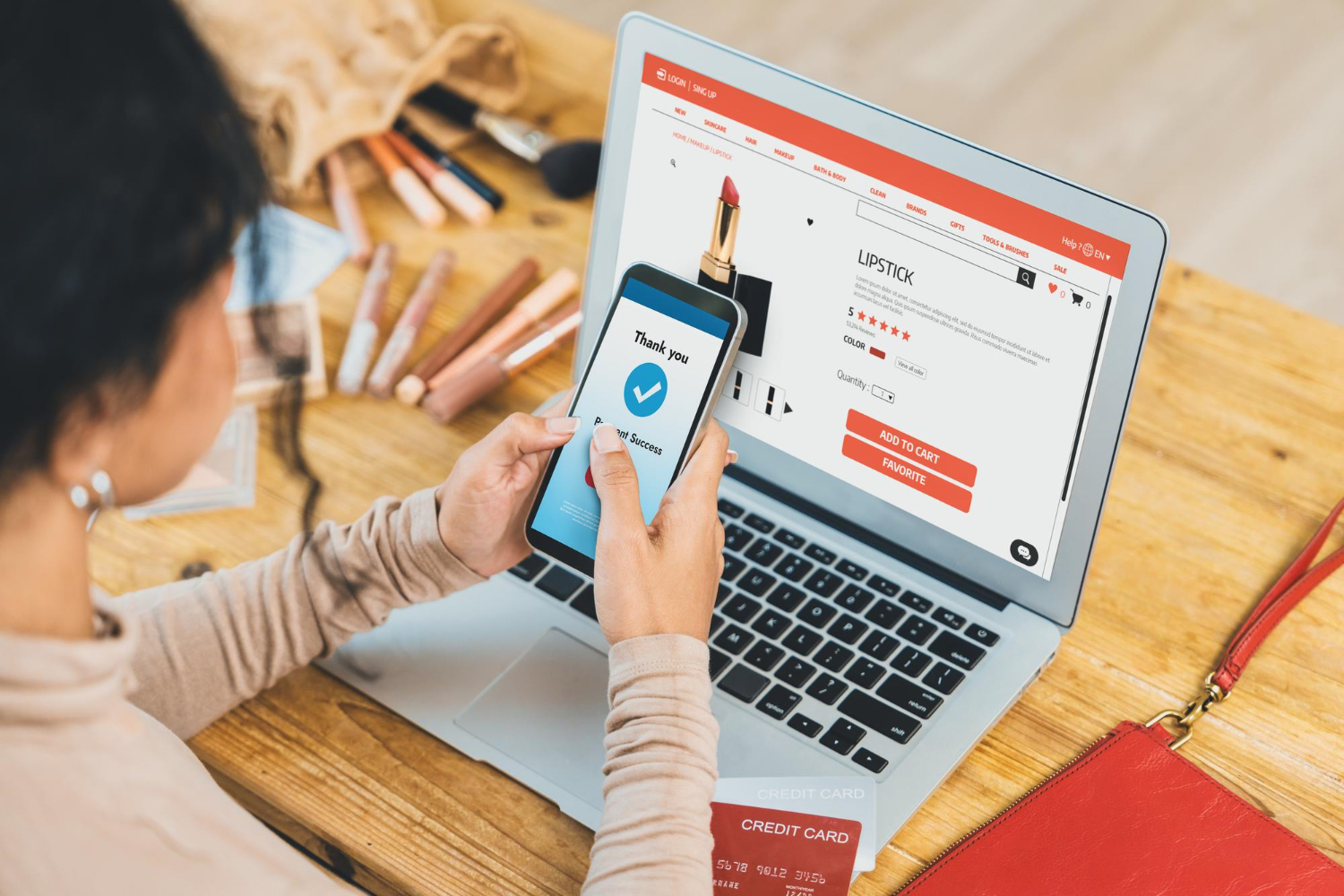
Your potential customers are already doing research before contacting you. Having a digital presence no longer means simply opening a social media account.
When someone discovers a company, they may search for:
And that is where a silent evaluation begins. The customer has not written to you yet. They have not called. They have not asked for the price. But they are already forming an opinion. Your digital presence is speaking for your company before you have the opportunity to do so. That is why, when someone searches for how to improve a business's digital presence, a professional website is usually an important part of the answer. Not because a website is a technological obligation, but because it can centralize the information that helps the customer decide whether to remain interested.
Suppose a customer receives two recommendations.
Company A
They search for it and find:
Company B
They search for it and find:
Company B may actually be better. It may have more experience, better professionals, and provide outstanding service. But the customer still does not know that. They can only evaluate what is in front of them. Online, perception comes before experience. And an unprofessional digital presence can create doubts that never turn into a phone call.
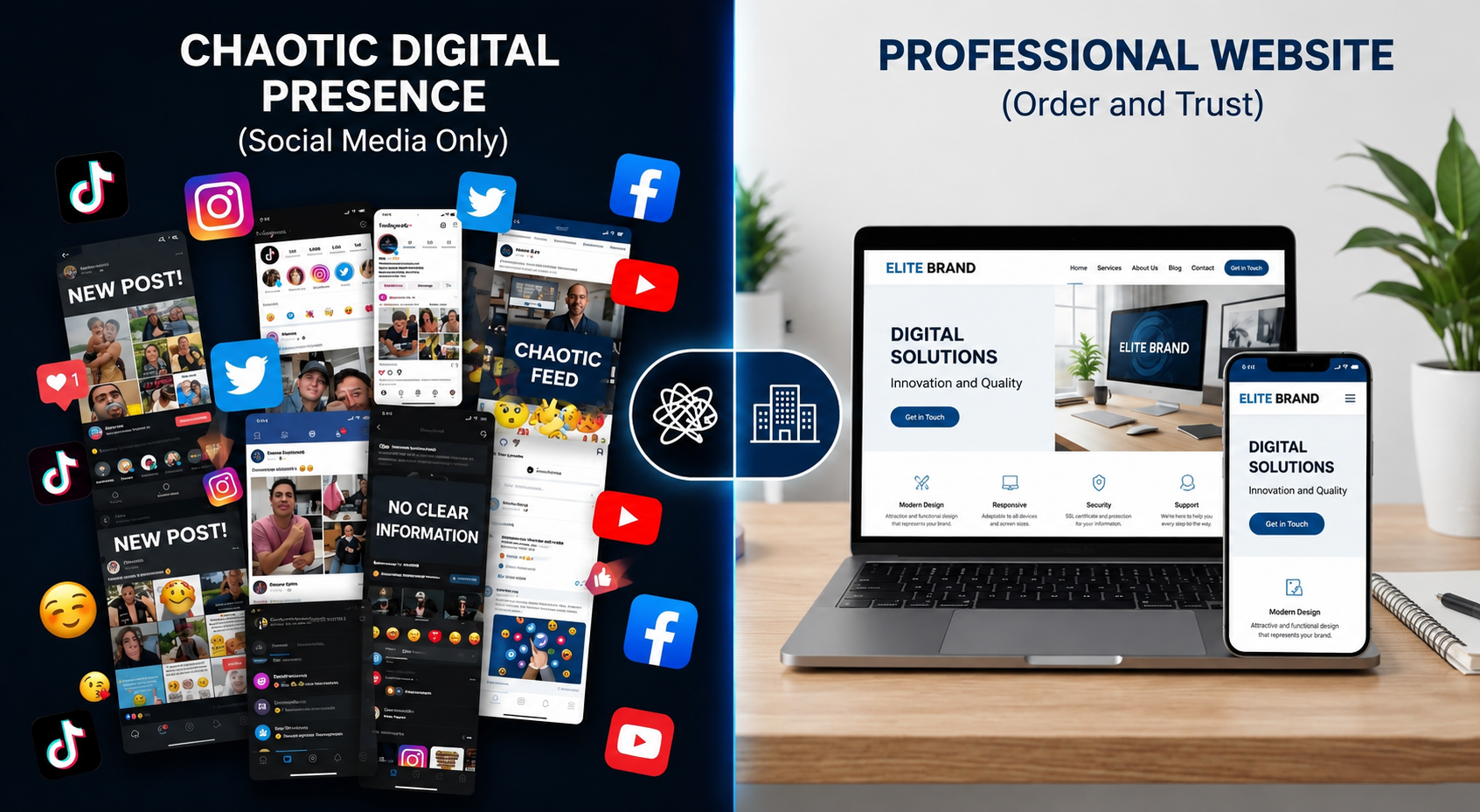
Not every business needs a huge platform or a complex online store. But a website for a business can fulfill several important commercial functions.
1. It helps the customer quickly understand what you do
A good website should answer the following questions within a few seconds:
What does this company offer?
Who is it for?
How can it help me?
How can I contact it?
If we force the customer to do too much research, we are introducing unnecessary friction.
2. It can increase trust
A professional website allows you to present elements such as the following in an organized way:
This does not mean that having a website automatically makes a company trustworthy. It means you have your own space to show why people should trust it.
3. It works even when you are not available
There are questions you probably answer over and over again:
“What services do you offer?”
“Where are you located?”
“How does it work?”
“Do you work with companies?”
“How can I request a quote?”
A website can answer many of these questions without someone on your team having to type the same explanation every time. That is why we often say that a website can become a kind of digital salesperson available 24 hours a day. It does not replace your sales team. It prepares the customer. When the customer finally gets in touch, they may already have much more information.
4. It makes it easier to get customers online
One of the common questions any business owner may search for is:
“How can I get customers with a website?”
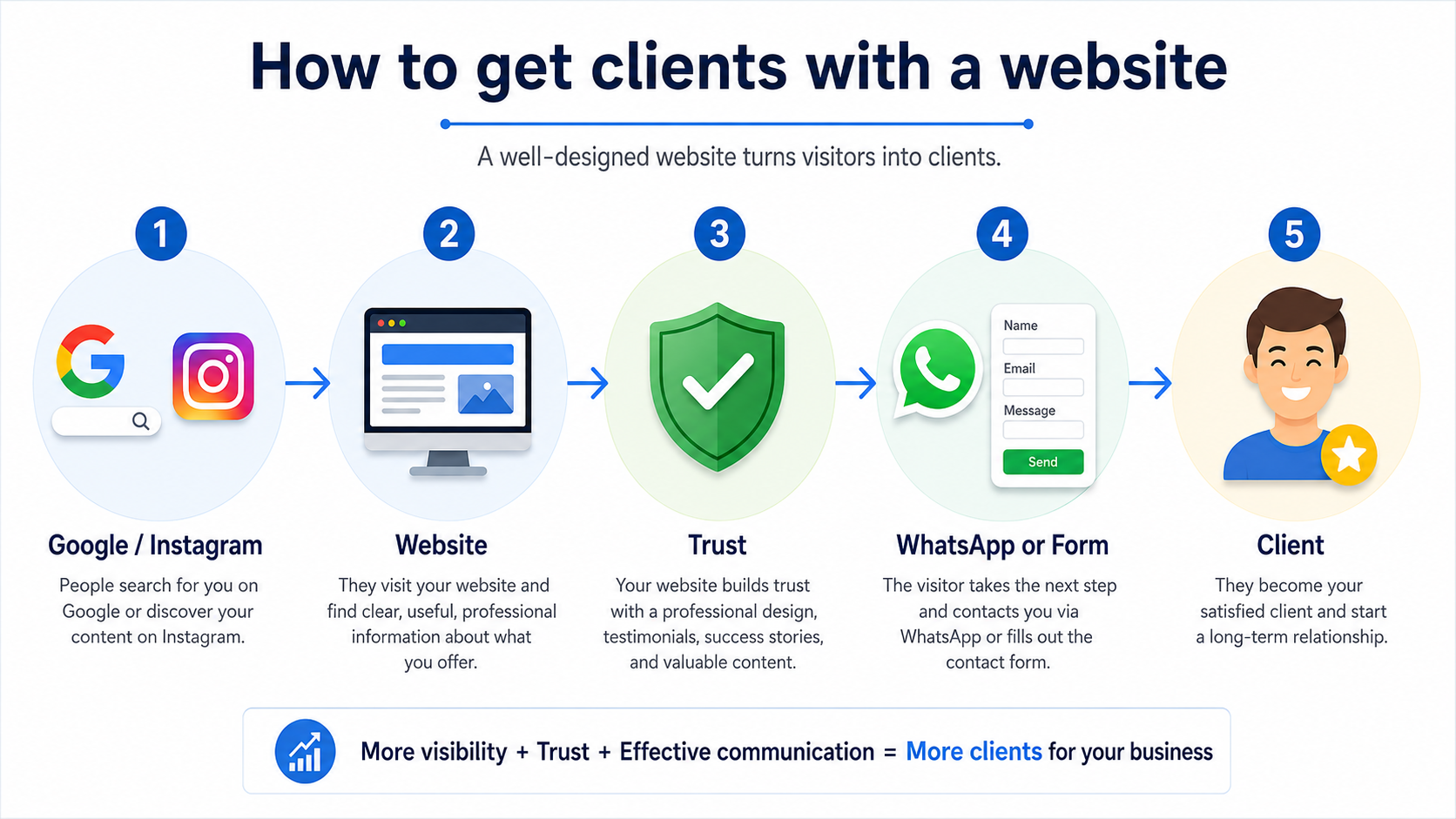
The important answer is that having a website by itself does not guarantee customers. The website should be part of a system.
For example:
Google → website → service → trust signals → WhatsApp → contact
or:
Instagram → website → information → form → business opportunity
A website works much better when it has a specific goal.
That goal may be:
A beautiful website without a clear next step is unlikely to reach its full potential.
It is a completely valid question. And the answer is not to abandon Instagram.
Instagram can be excellent for:
The website can be used to:
So it is not about: Website VS. Instagram.
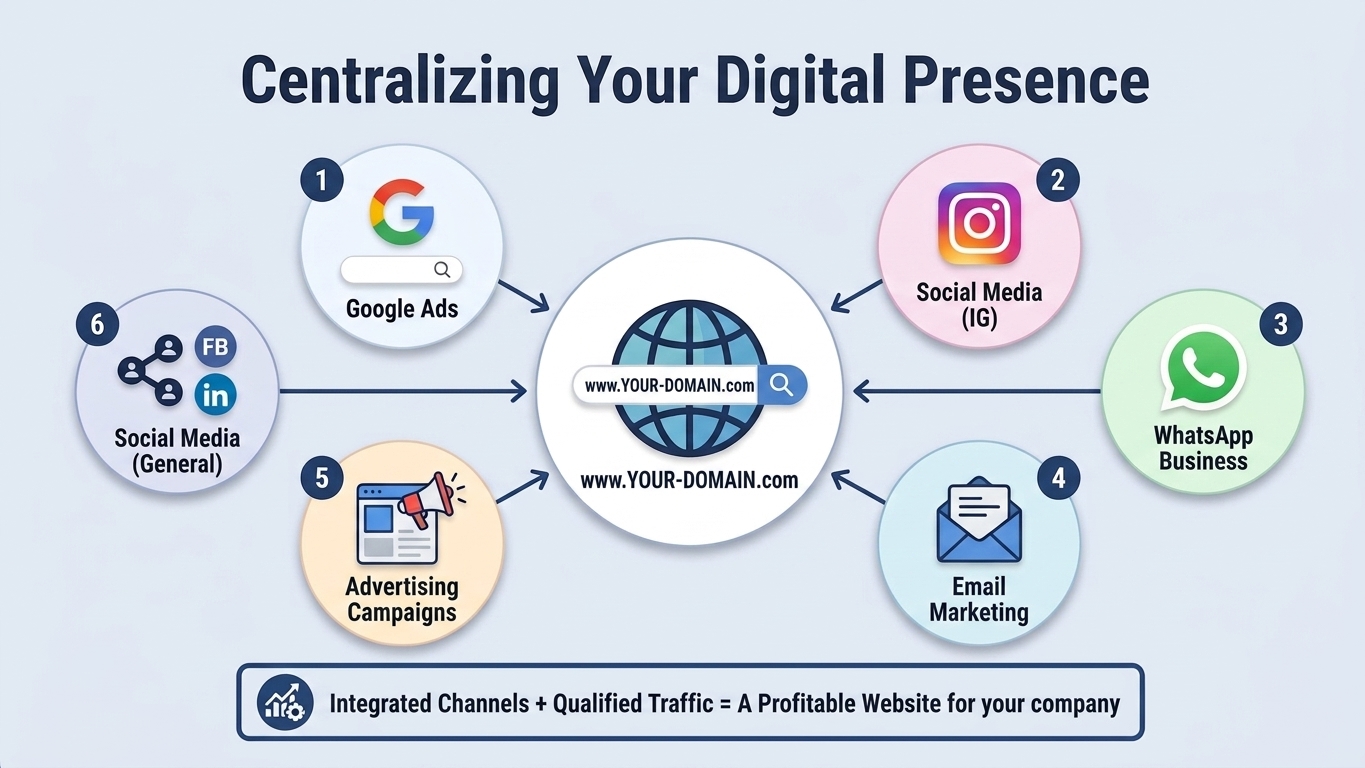
The more interesting strategy is usually:nInstagram + website + search engines + WhatsApp. Each channel supports the next one.
There is also an important difference. Your social media profile exists within another company's platform. Your website operates around a domain that belongs to your business as long as you keep its registration active. This allows you to gradually build your own digital asset:
You can use it on:
And progressively develop everything around that domain.
You may still be wondering whether the time has come. These signs can help you decide.
If every day you answer questions on WhatsApp about what you do, where you are, how much it costs, or how it works, some of that information should be organized on your website.
Social media can be important, but it should not necessarily contain a company's entire digital presence.
Try it. Search for your business name from a private browser window. Then search: service + city and see what appears. Try to do it as if you were a customer who does not know the company.
That does not mean you have to copy them. But if a competitor makes research and contact much easier, it has an advantage during the comparison stage.
A website can turn all that scattered information into an organized journey.
This is particularly common. The business evolves. The team grows. Better clients arrive. Larger projects are completed. But the digital presence remains exactly the same as it was five years ago.
At that point, you no longer simply need to “have a website.”
You need a website designed around a strategy:
attract → explain → build trust → convert.
Although every project is different, a business website should consider at least the following elements:
The visitor should understand what you do.
A significant portion of your potential customers will arrive from a phone.
Simply writing the name of the service is not enough. Explain the problem it solves, who it is intended for, and what the customer gets.
For example:
Request a quote
Chat on WhatsApp
Book an appointment
View our projects
Real case studies, testimonials, photographs, clients, experience, or information that makes it possible to verify who is behind the company.
For example:
To maintain a secure connection through HTTPS.
Do not force the user to search for a way to contact you.
Every additional obstacle increases the chances that the visitor will leave.
Service pages and blog articles can answer the questions your potential customers are asking online.
No. And any serious company should tell you that clearly.
A website cannot compensate for:
But a good website can remove many obstacles between an interested person and your company. It can help the visitor:
find you, understand you, trust you,
and finally:
contact you.
That should be the real objective.
You will probably never be able to calculate it with complete precision. That is precisely the problem. The customer who did not contact you usually does not send you a message saying:
“Hello. I was going to buy from you, but I could not find enough information, so I hired another company.”
They simply disappear.
You never know they existed. That is why lost opportunities are difficult to measure. A company may think:
“No one has ever told me they did not buy from me because I do not have a website.”
Of course.
The customers who left probably never got as far as talking to you.
This is another important shift in mindset. Do not build a website solely so you can say:
“We have a website.”
Build a website that has a purpose. For some businesses, that purpose will be:
For others:
For others:
The right question before designing it is:
When that answer is clear, we can design everything else around it.
If your company is already operating, you have good products or services, but when someone searches for you they find a digital presence that does not truly represent the quality of what you do, it is probably time to review it. It is not only about being online.
At PixelgrafÃa we develop professional websites tailored to the needs of each business, and we can take care of the complete solution:
Each project is quoted according to its needs because not every company requires the same type of website.
Tell us what your company does and what you want to achieve. We will help you identify the right solution.
You do not necessarily have to choose one or the other. Social media can help you attract attention and build a community, while a website allows you to organize information, present your services, and build a digital asset of your own.
It depends on how it gets customers and what its goals are. If people search for your business, compare providers, need to learn about your services, or you want to attract new customers online, a professional website can make a lot of sense even for a small business.
The website needs traffic and must be designed to turn that traffic into actions. SEO, content, social media, and advertising can bring visitors; a clear value proposition, trust signals, and calls to action help turn them into leads.
It depends on the goal. It may be a landing page, a corporate website, a catalog, an online store, a booking platform, or a custom solution.
The price depends on the number of sections, features, content, integrations, and the complexity of the project. That is why it is advisable to first define what the website needs to do before requesting a quote.
Not sure what type of website your business needs? Tell us what you do and what you want to achieve.
Complete the form and we will reply as soon as possible.


