

Your website can build trust before someone contacts you by answering three practical questions: Do you understand their needs? Can you support your claims? What happens if they reach out? Clear answers help a potential customer evaluate your business without having to commit to a conversation first.
A referral or social post may bring someone to your site, but interest alone does not resolve uncertainty. They may still wonder whether you handle projects of their size, who will do the work, or whether requesting information means agreeing to a sales call.
A useful website gives them enough context to make that first inquiry with realistic expectations.
Start with the questions you hear before a customer hires you. Review inquiry emails and sales conversations, and separate genuine project questions from questions your website should already answer.
Group them around five decisions:
Use these questions to shape your service pages. Visitors should be able to evaluate a specific offer without piecing it together from unrelated posts, portfolio images, and a general contact page.
A phrase such as “complete business solutions” leaves the reader to guess what you actually deliver. Describe the problem you solve, who you work with, and the boundaries of the service.
For an illustrative example, a commercial maintenance company could explain the types of offices it serves, the tasks included in a visit, and how it checks service-area availability. Those details help an office manager decide whether an inquiry is worthwhile.
Explain meaningful exclusions alongside the offer. If materials, travel, or ongoing support require a separate estimate, say so. When pricing depends on an assessment, describe the information you need and the factors that affect the proposal. Keep published expectations consistent with the way you actually work.
A finished image can show visual quality. A short project story can explain what you contributed and whether that experience is relevant to the reader.
For a website project, you might show a reorganized product catalog or a working booking flow. A claim about increased revenue needs supporting business data. Without that evidence, describe the change you can demonstrate.
Publish genuine testimonials with permission and preserve their meaning. Where a relevant public review exists, give readers a way to verify it. Concept work can also demonstrate your approach when it is clearly labeled as a demonstration.

Introduce the people involved, their roles, and the experience that matters to the work. If you are an independent professional, explain your direct involvement. If you operate as a team, clarify who coordinates the project and who handles specialist tasks.
Keep your business name, service information, and contact channels consistent. A remote business can explain how it works and when appointments are available. It does not need to imply that it operates a walk-in office.
Use authentic photographs when presenting your team, premises, or completed work. Illustrative images can explain an idea, but should not stand in for evidence that those people or places belong to your business.
SUGGESTED INTERNAL LINK: [Website elements that build customer trust].
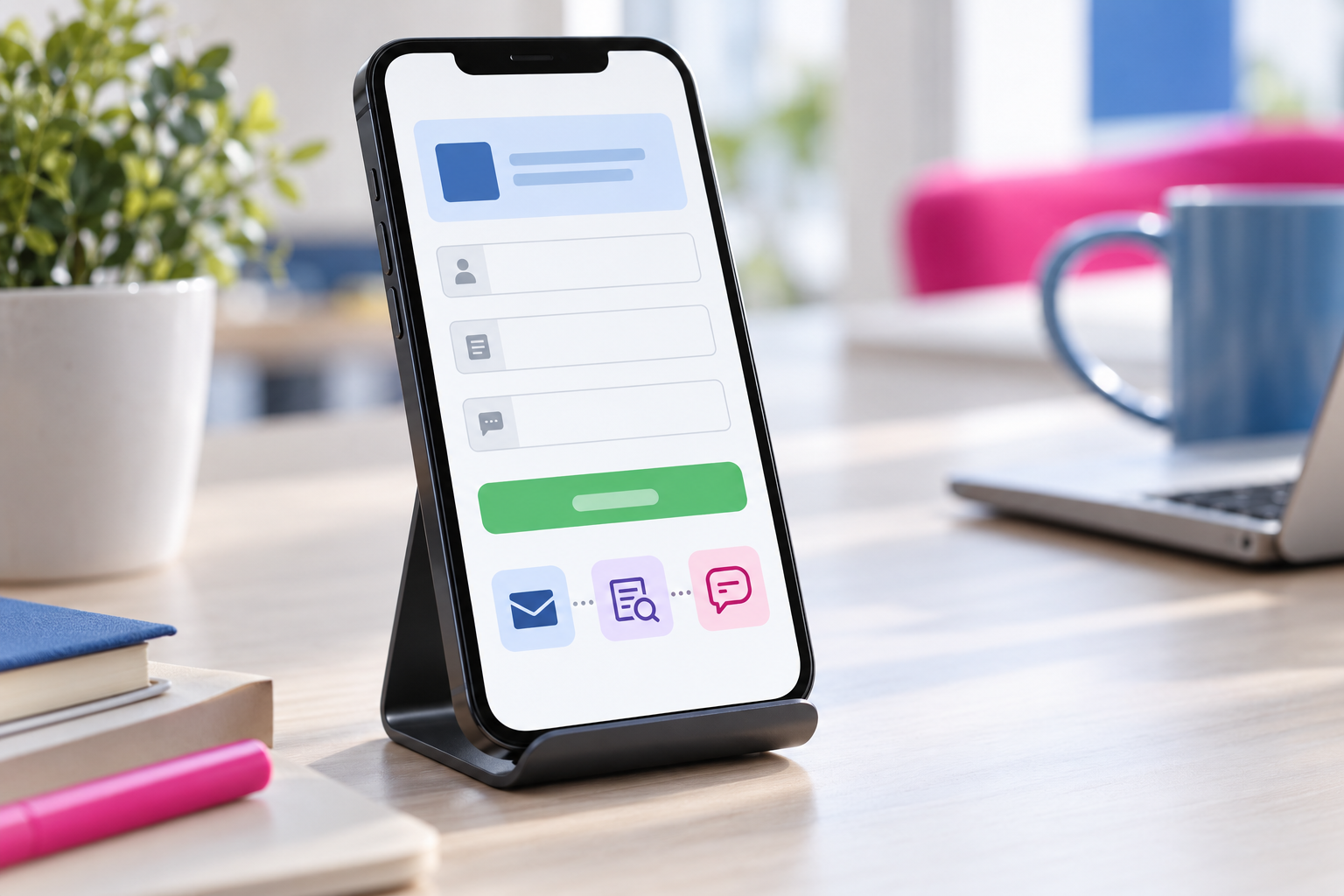
Explain what to send, who reviews the request, and what usually happens next. This context belongs close to the contact form, where the visitor is deciding whether to share their information.
For example, if it accurately reflects your process: “Tell us what you need and where the project stands. We will review the details and let you know whether we need more information or can prepare a proposal.”
Only publish response times you can consistently meet, with business hours where relevant. Clarify whether an assessment carries a fee and whether the initial inquiry creates any commitment.
Ask for the information needed at this stage. Depending on the service, a name, one reply channel, and a short description may be enough. Explain how you use those details and make your privacy information accessible.
Test the form on a phone. Check whether field labels are understandable, mistakes can be corrected, and a successful submission produces confirmation. Verify that the message reaches the right person, too. A button click is not the same as a received inquiry.
SUGGESTED INTERNAL LINK: [connecting your website and WhatsApp].
Ask someone unfamiliar with your business to find a service, explain its scope, locate evidence of relevant experience, and identify how they would contact you. Watch where they hesitate without giving directions.
If the offer is unclear, improve the explanation. If the work lacks context, document a project. If the form fails, repair the inquiry process before sending more visitors to it.
After making changes, review the inquiries you receive and the questions people continue to ask. Compare periods with similar traffic sources, and avoid assuming every change came from the website update. Better-informed inquiries can matter as much as a higher inquiry count.
A full rebuild is not always necessary. Content improvements, a suitable website template, or an existing booking tool may address the problem. Custom development makes sense when specific workflows or integrations require it.
Pixelgrafía can assess how your content, design, and website functionality work together, helping you identify where potential customers need more clarity.
Show clearly labeled sample projects, explain your working process, and provide relevant background. Demonstrate what you can do without presenting practice work as a paid client engagement.
Share only approved information. Where permitted, explain the problem and your contribution without revealing confidential details. Otherwise, create a separate demonstration and identify it accurately.
Not necessarily. If the underlying structure works, improving a service page, explaining selected projects, and fixing the inquiry form may be enough.
Use the form below this article to tell us what you offer and which questions customers ask before hiring you. Pixelgrafía can help you identify website improvements that support a more confident first conversation.
Complete the form and we will reply as soon as possible.


