

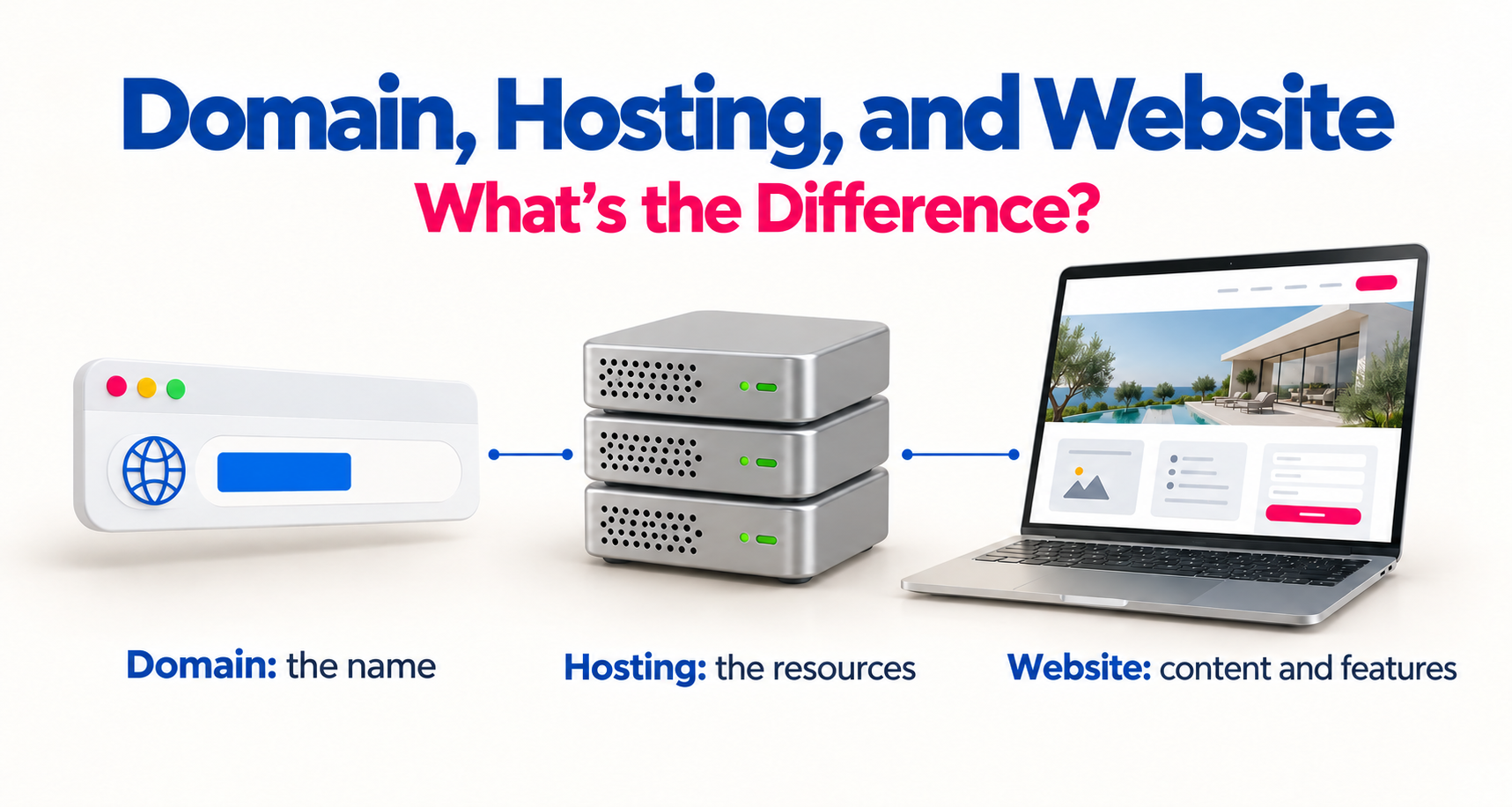
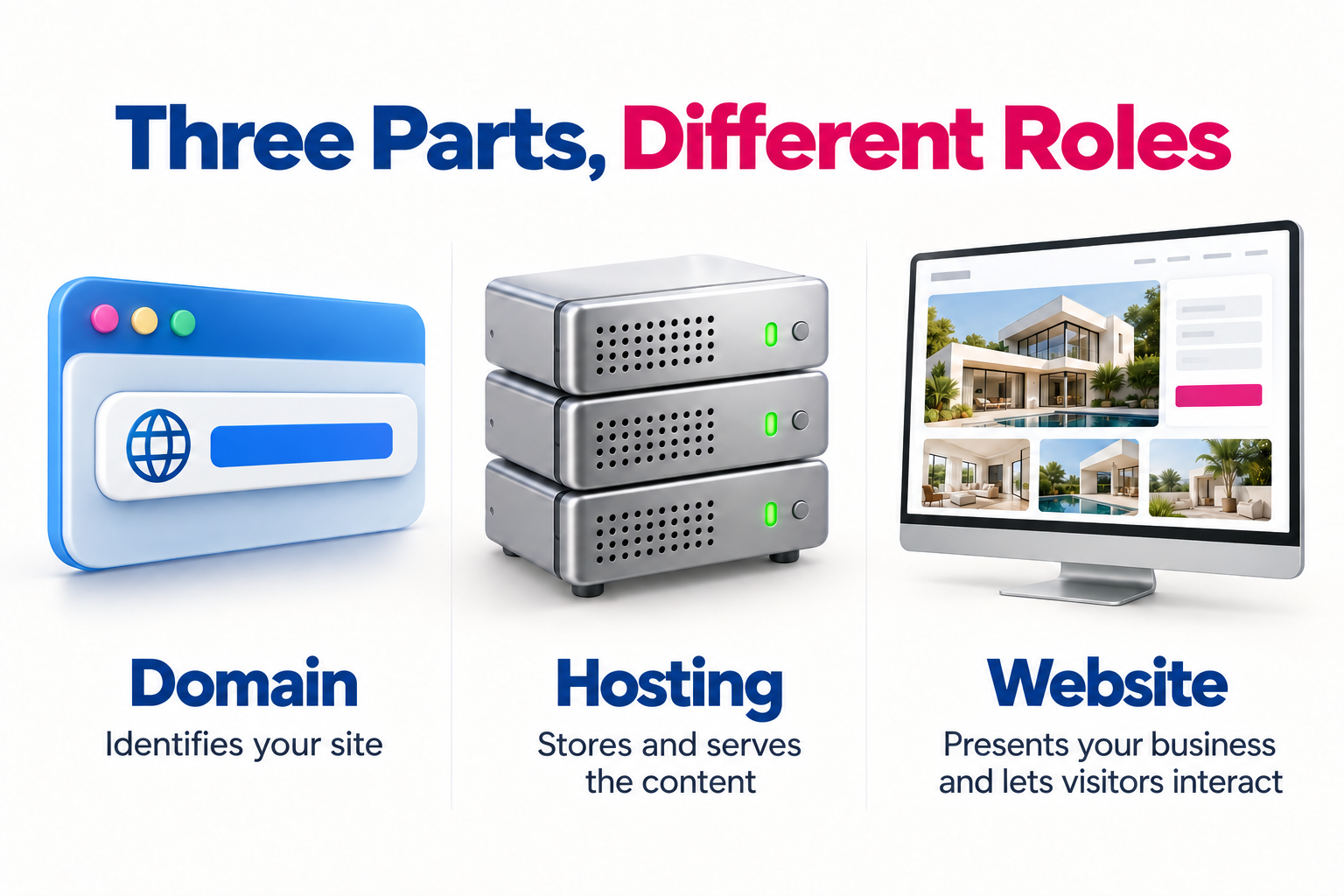
A domain name identifies your site, web hosting provides the resources to make it available online, and the website contains the information and features your customers use. A provider may bundle all three, but they are different parts of the service.
Knowing what each one does makes it easier to compare proposals, avoid paying for overlapping services, and choose a setup that supports your business.
A domain gives people a memorable name to use when visiting your site. You can also connect it to an email service so your business email addresses use the same domain.
Registering a domain does not automatically create a website, provide hosting, or set up email. You register the right to use the name for a defined period, under the applicable registration and renewal terms.
Hosting provides storage and other resources that allow your website’s content to be delivered to visitors. Depending on the site, it may also run software and handle database requests.
A hosting subscription does not necessarily include website design. Some plans offer a website builder, while others expect you to supply an existing site.
Your website brings together your content, design, and functionality: service descriptions, project photos, contact forms, product listings, or booking tools. It may consist of a single page or multiple connected pages.
For your business, its purpose is to explain your offer, answer customer questions, and make the next step easy.
SUGGESTED INTERNAL LINK: what a business domain name is used for.
In simple terms, a browser needs to find where to request the content associated with a domain. DNS helps by connecting domain names to the information needed to locate the relevant services. The browser then requests the content and displays the page.
You do not need to manage this process yourself. You do need someone responsible for connecting the domain, setting up the site, and checking that everything works.
Consider an independent consulting firm. Registering its business name as a domain gives it an address. It still needs a website with services, experience, and a way to get in touch, plus a compatible place to host it. If the firm chooses a hosted website builder, hosting is already part of that platform’s service.
“Complete website package” is not a precise scope of work. Ask the provider to identify:
Also establish who supplies the copy and images, whether your team can edit the site, and what happens when the agreement ends. The launch price alone does not tell you what the website will cost to operate.
A bundled service can simplify billing and support. Separate providers can give you more choice, but someone must coordinate settings, access, and responsibilities.
The right choice depends on how you want to manage the site. Either way, understand what you can keep and move if you later switch providers.
Some hosted platforms do not let you export a complete working copy of the site to another host. Exporting content is different from transferring the design, software, and every feature.
A well-adapted template or suitable website builder may be enough for a service business that needs project pages and inquiries. Custom development becomes more relevant when you need workflows, integrations, or functionality that existing tools cannot adequately support.
Before buying separate hosting, check whether your chosen platform already includes it. Before commissioning a replacement website, assess whether the existing one can do the job with targeted improvements.
SUGGESTED INTERNAL LINK: what a small business actually needs from a website.
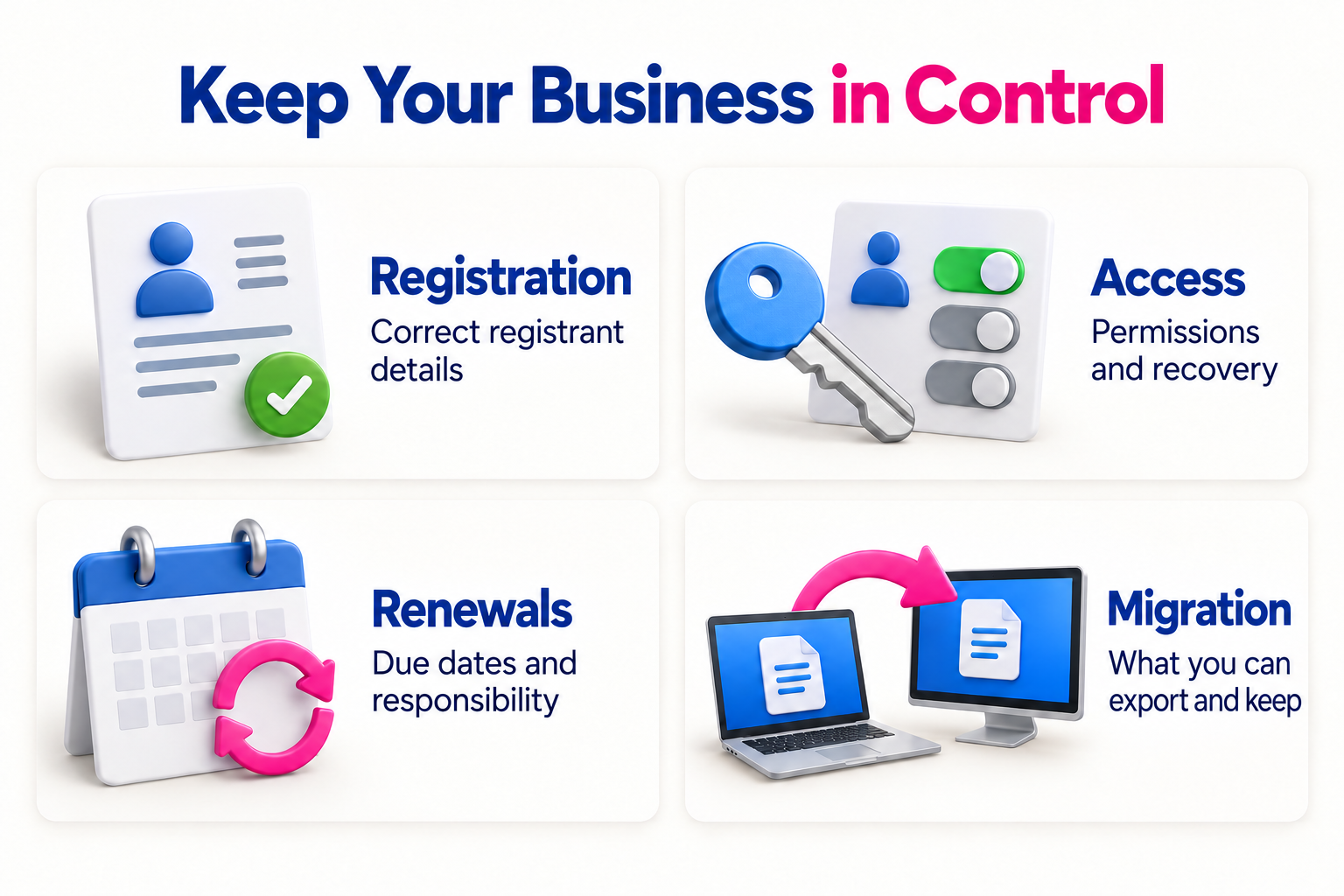
Your provider can manage the technical work while your business retains the information and access it needs. Keep a record of:
You can generally keep your domain when moving to a new host. Moving the website and transferring domain registration are separate tasks. Configuration changes also need to preserve the records your email service relies on.
Yes. You can register it for a future project or connect it to an email service. Registration alone does not create website content or email accounts.
Some platforms provide an address under their domain. That can be useful for getting started, but your use of that address depends on the platform’s terms and continued service.
Those services support the site’s address and availability. Customer acquisition also depends on useful content, search visibility, usability, and how people discover your business.
Start with what the website needs to accomplish: explain your services, generate inquiries, sell products, or accept bookings. Then choose the platform and services that support that goal. Pixelgrafía can help you assess those needs and select an appropriately sized solution.
Use the form below this article to tell Pixelgrafía what you want your website to achieve and which services you already have. We’ll help you identify what you need to launch or improve it.
Complete the form and we will reply as soon as possible.


