

A domain name is a unique, readable name used to identify resources on the internet. For a business, it can support a website, branded email addresses, and a consistent destination for customers. You can keep that name even when you change the companies providing your website or email service.
Registering a domain does not automatically build a website or create an inbox. It gives you a name to connect to the services your business needs.
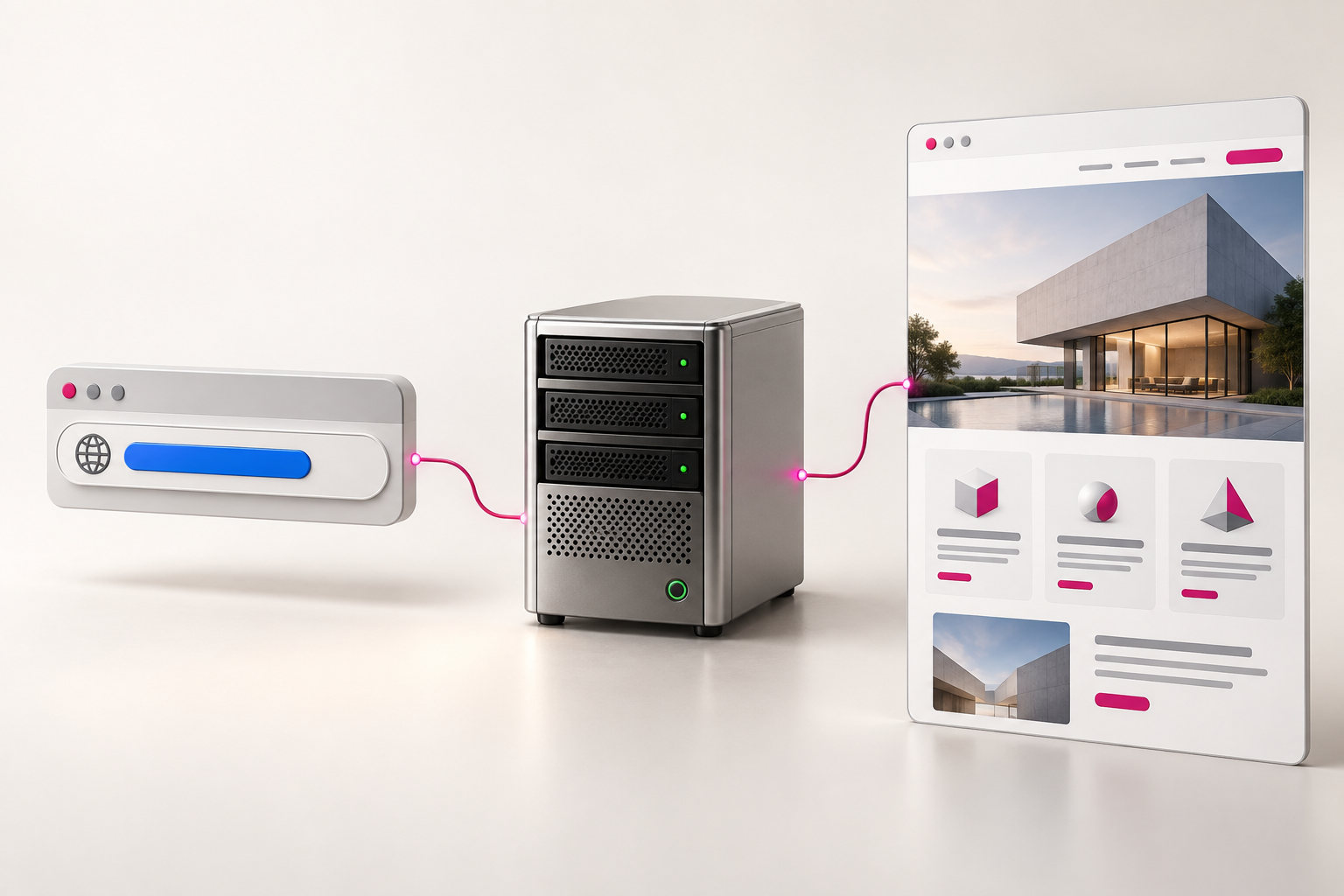
A domain is the name customers can enter into a browser to reach your website once it is connected. DNS, the domain name system, works like a directory that connects the name to the appropriate services.
The ending, such as .com or .net, is part of the domain. The www prefix is optional: your website can use it or omit it, with both versions directed to a preferred version.
From a business perspective, the essentials are straightforward: customers should recognize the name, it should lead to the right place, and your company should retain control of it.

These items often appear together in a quote, but they serve different purposes:
A provider may bundle them into one package. Ask which services are included, which renew separately, and what you can move if you decide to switch providers.
You can use the same domain on proposals, business cards, social profiles, and customer communications. If you later move to a different website platform, you can keep the name and connect it to the new site, provided you maintain registration and plan the change.
This separates your public address from a particular website tool. You still depend on service providers, but your business identity does not have to change whenever your software does.
Your website and email addresses can use the same domain, making it easier for a customer to connect an inquiry, a proposal, and your company website.
You still need an email service and proper configuration. Registration alone does not create mailboxes, provide message storage, or authenticate outgoing email.
SUGGESTED INTERNAL LINK: [personal Gmail versus business email].
A straightforward domain makes it easier to tell someone where to find your business information. What they find there should support that first impression: clear services, genuine work examples, and a contact process that works.
A domain helps identify the business. It does not certify the quality of its work.
SUGGESTED INTERNAL LINK: [what makes a business look professional online].

Start with the name customers already associate with you. Say a candidate aloud and ask someone to type it. If it requires repeated explanations, consider a clearer option.
A country-specific extension may suit a business focused on that market. A generic extension can work for a broader audience. Check the registration requirements for the extension you choose.
Do not pay for an extension because someone promises it will automatically put your website first in Google. A generic domain ending alone does not provide that advantage.
There is no single price. The extension, registrar, and any premium classification affect the cost. Compare registration, renewal, and optional services. A domain included in the first year of a website package may become a separate renewal charge.
Registration gives you the right to use the name for a defined term, rather than permanently. Failing to renew can disrupt connected services and eventually put the name at risk. Expiration and recovery conditions vary.
Before paying, establish who will be listed as the registrant, who can access the account, and who is responsible for renewal.
A designer or agency can handle domain administration. Your business should still know where the domain is registered and how to recover access.
Give technical collaborators the access they need and document changes. DNS updates can affect email as well as your website.

No. You can register the name before launching your website, use it for business email, or connect it to a simple landing page. If your first goal is to explain a service and receive inquiries, an appropriately customized template may be enough.
A store, booking system, or operation with integrations needs a broader assessment. The domain supports those services, but it does not determine how complex the project must be.
SUGGESTED INTERNAL LINK: [choosing the right website for a small business].
No. They can be separate. Connect the domain to the correct hosting service and preserve any records needed for existing email.
Consider a clear variation of your brand or another suitable extension. An address that does not display a website is not necessarily available.
No. A registrar transfer can keep the same name, subject to applicable conditions. It does not automatically move your website or email data.
Pixelgrafía approaches domain selection alongside its intended purpose: a website, email, catalog, or other digital service. Registration and configuration may be all you need initially, without committing to a full custom website.
Use the form below to tell Pixelgrafía your business name, the markets you serve, and whether you need a website, email, or both. Request a domain and setup proposal that fits your operation.
Complete the form and we will reply as soon as possible.


